

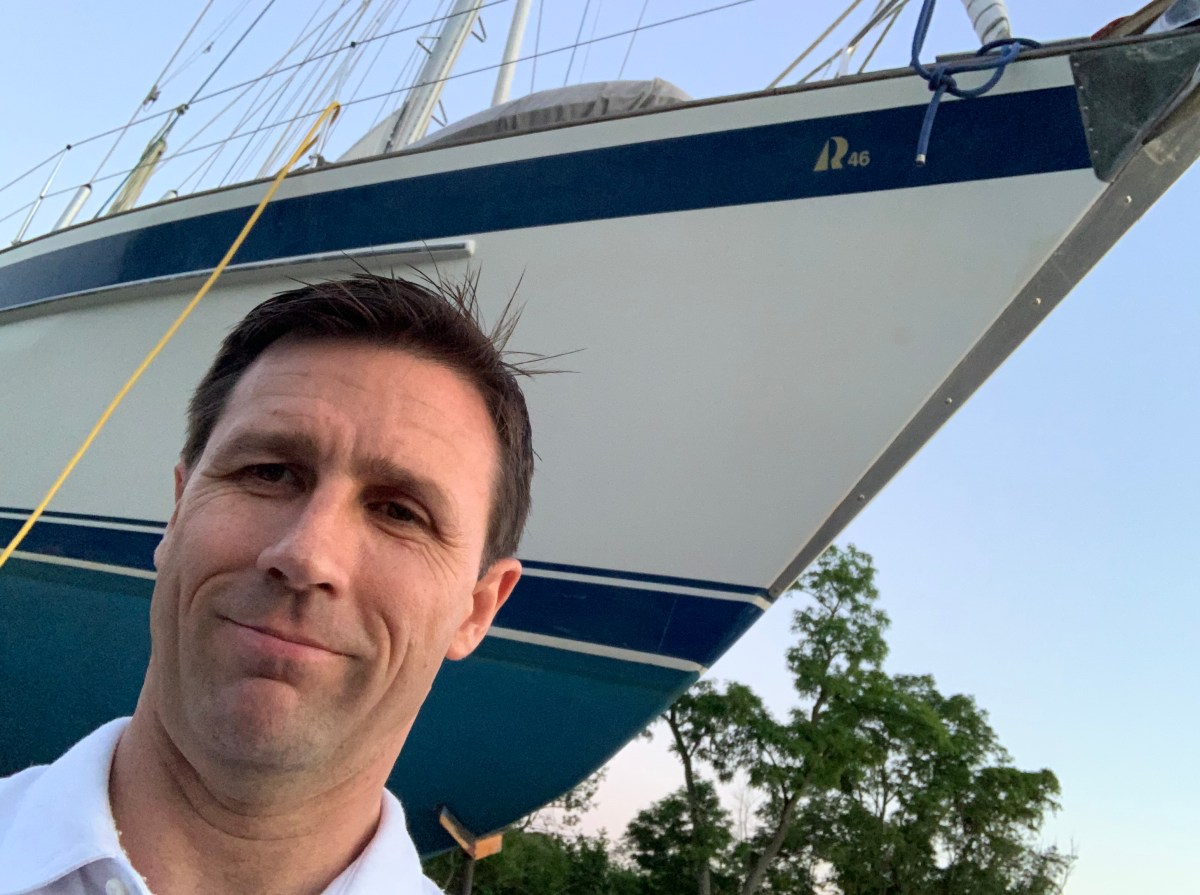
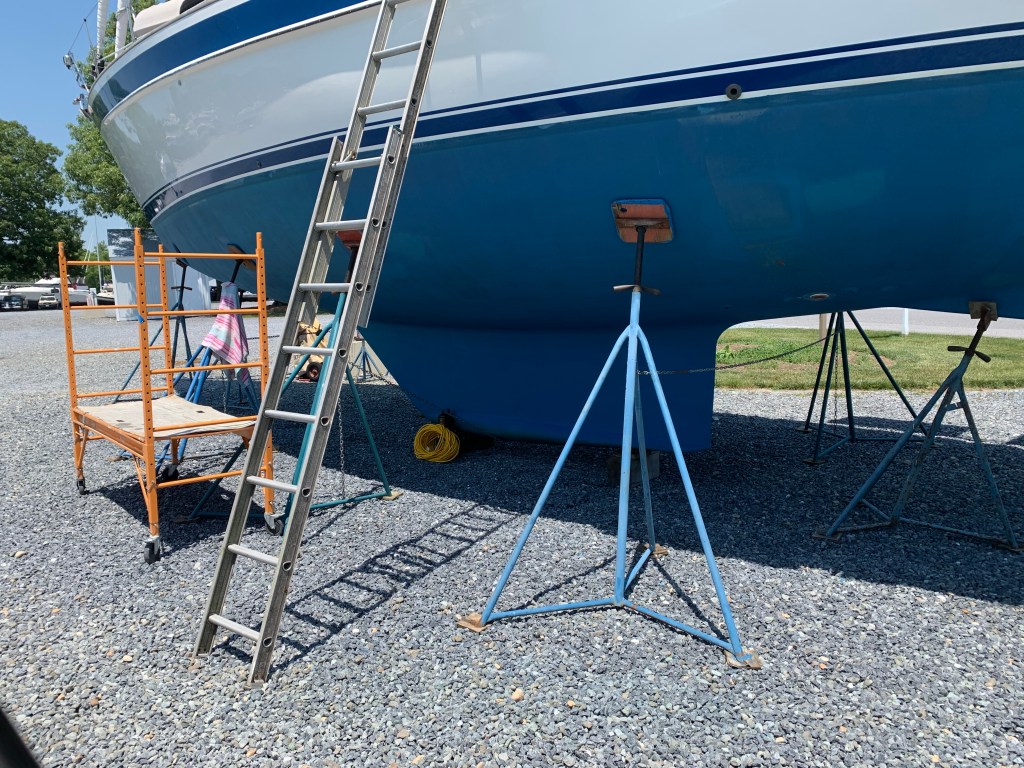
Although we wanted to sail the entire month of June prior to our planned trip to Block Island after the 4th of the July, the boat just told us that it wasn’t ready. We made a quick decision just before Memorial Day weekend to transport the boat to Herrington Harbour North (see previous post), and have it hauled out. This was tough decision, but in reality we have too much happening with end of school activities and work to sail the boat every weekend. This turned out to be a great decision in part, because there was severe weather between Annapolis and New Jersey during the Memorial Day weekend; we wouldn’t have been able to leave the dock safely. It was also a fortutitous decision, because we found some very interesting and troubling issues which we took advantage of the time to correct.
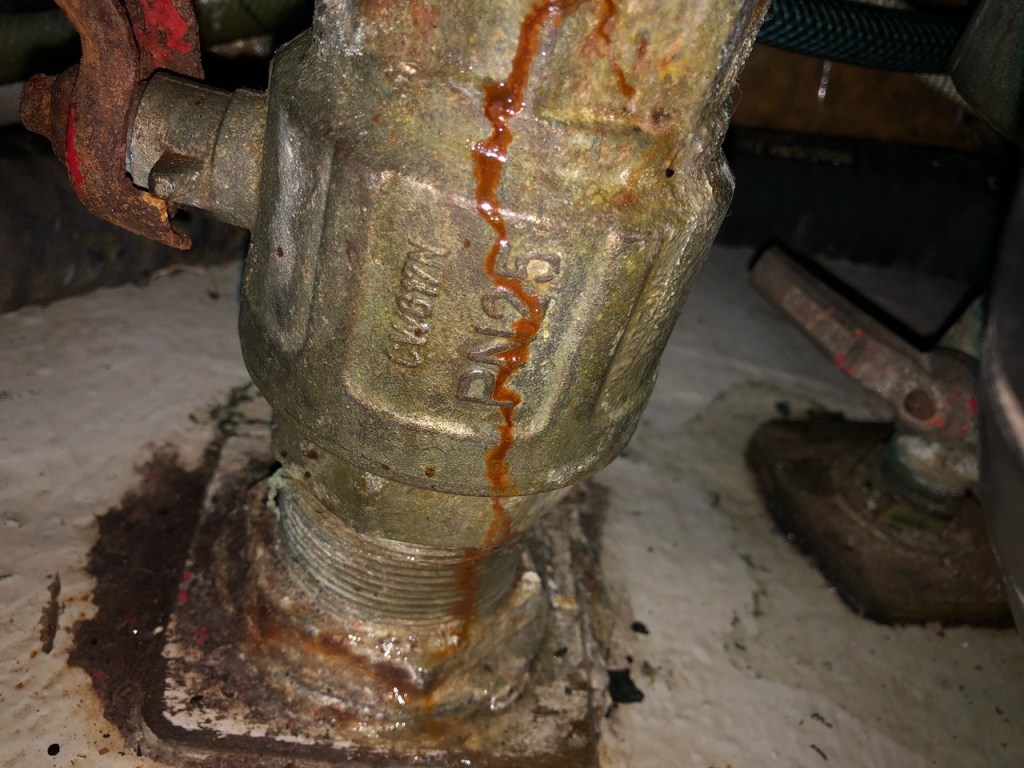
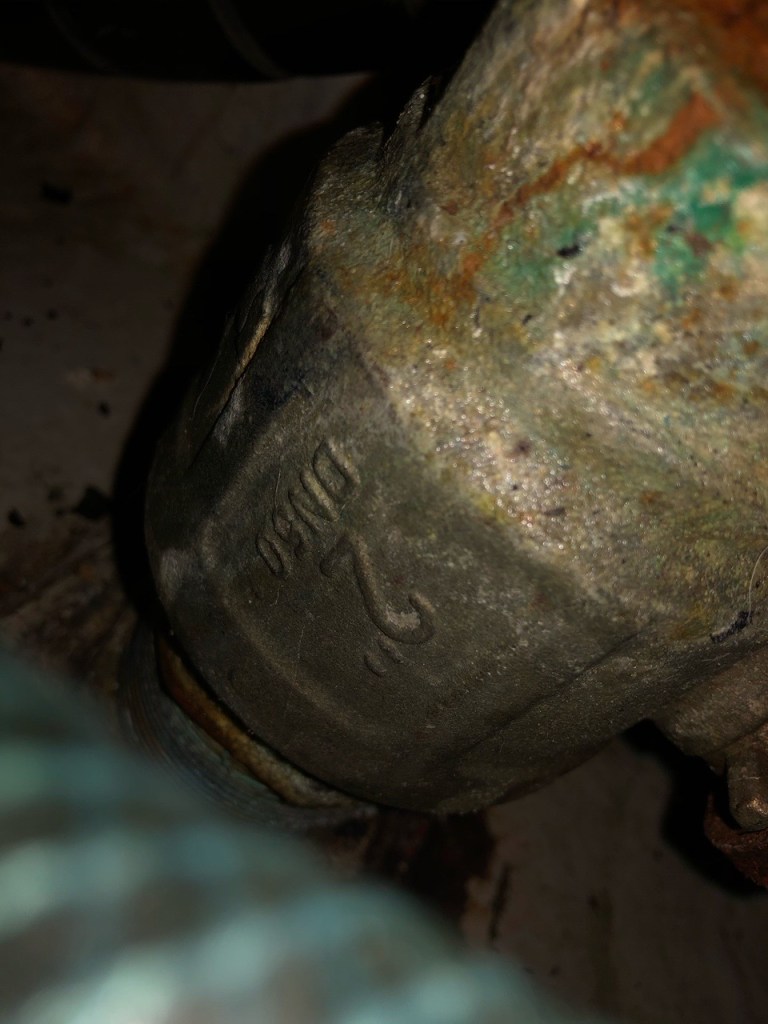
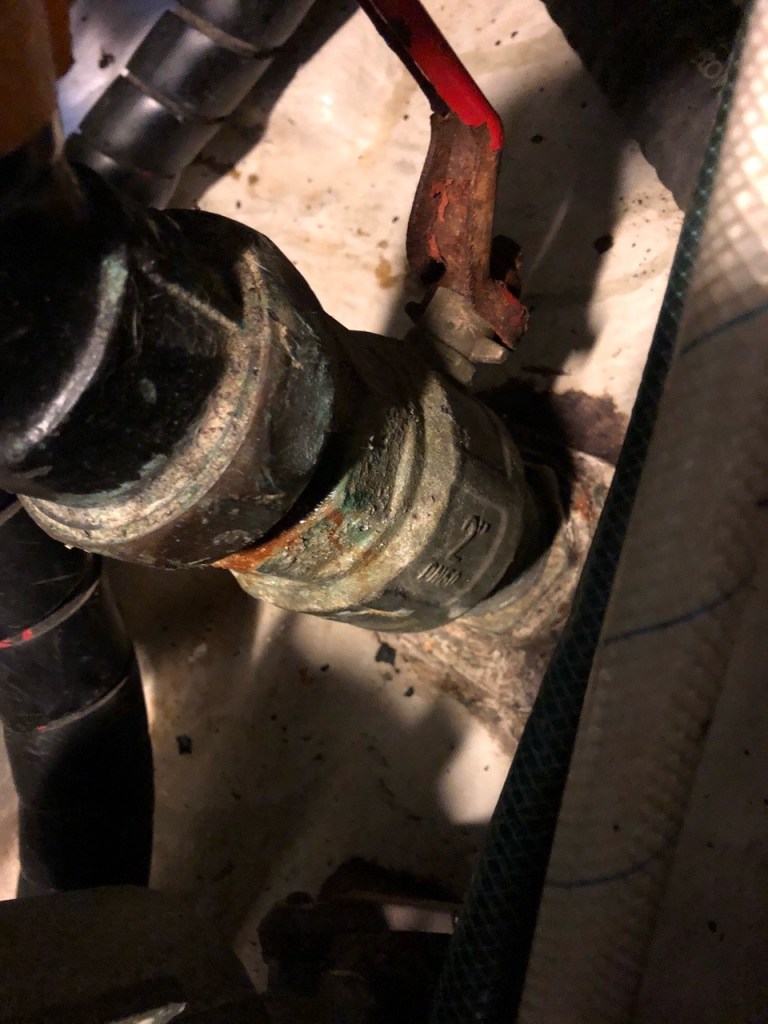
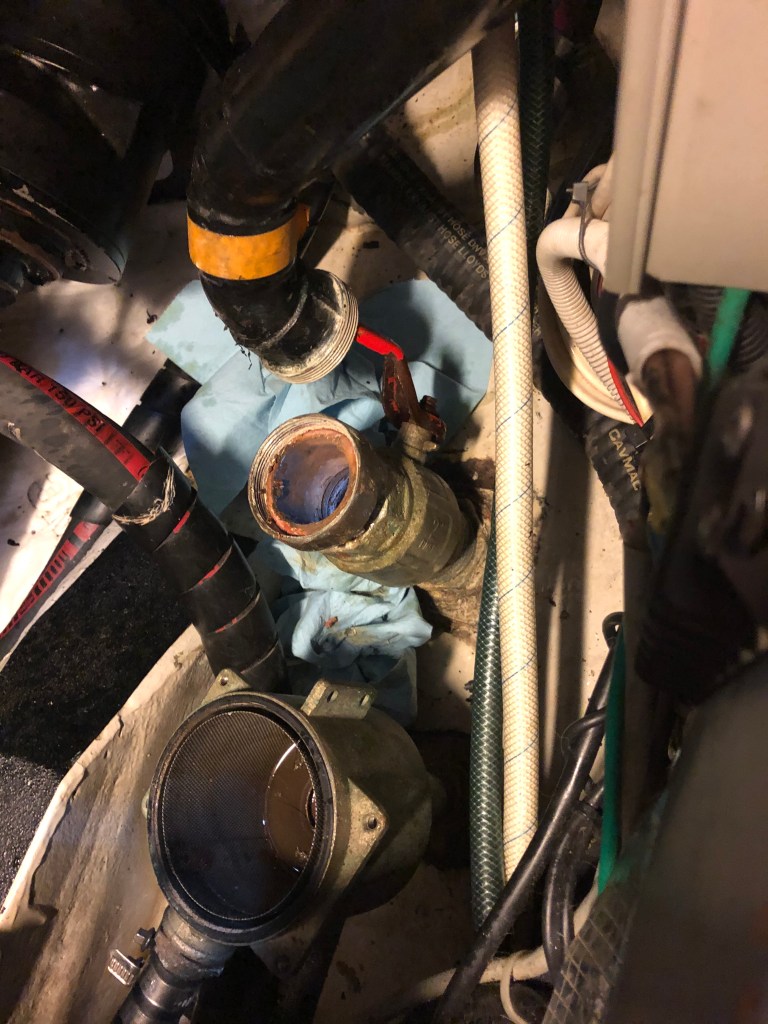
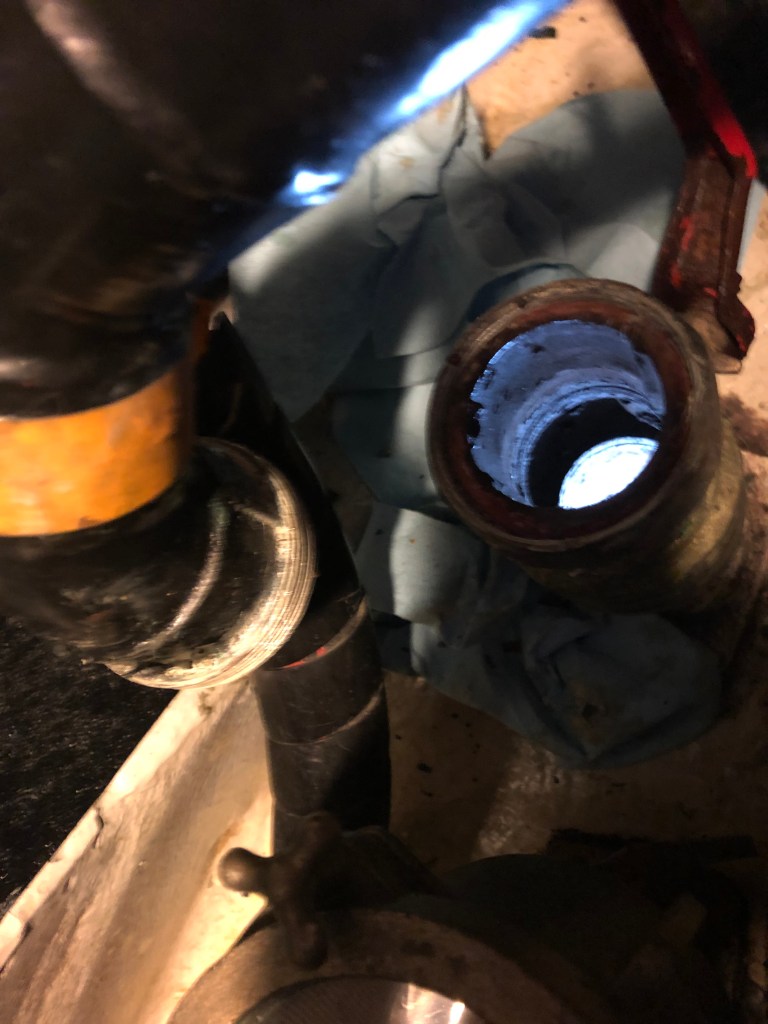
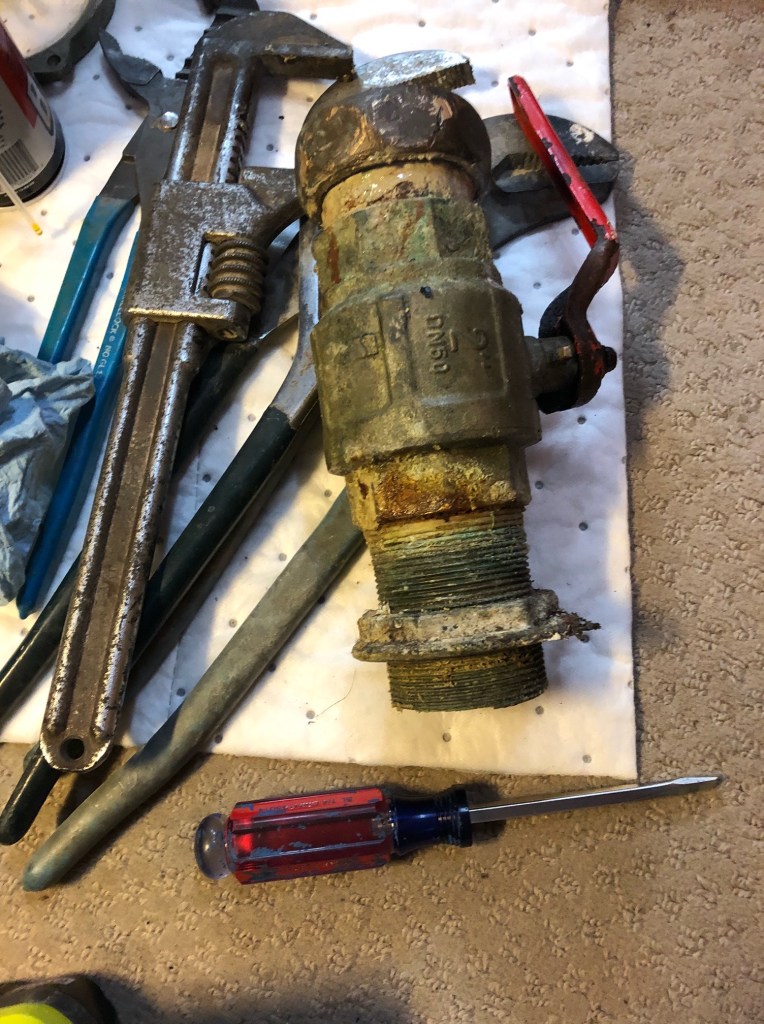
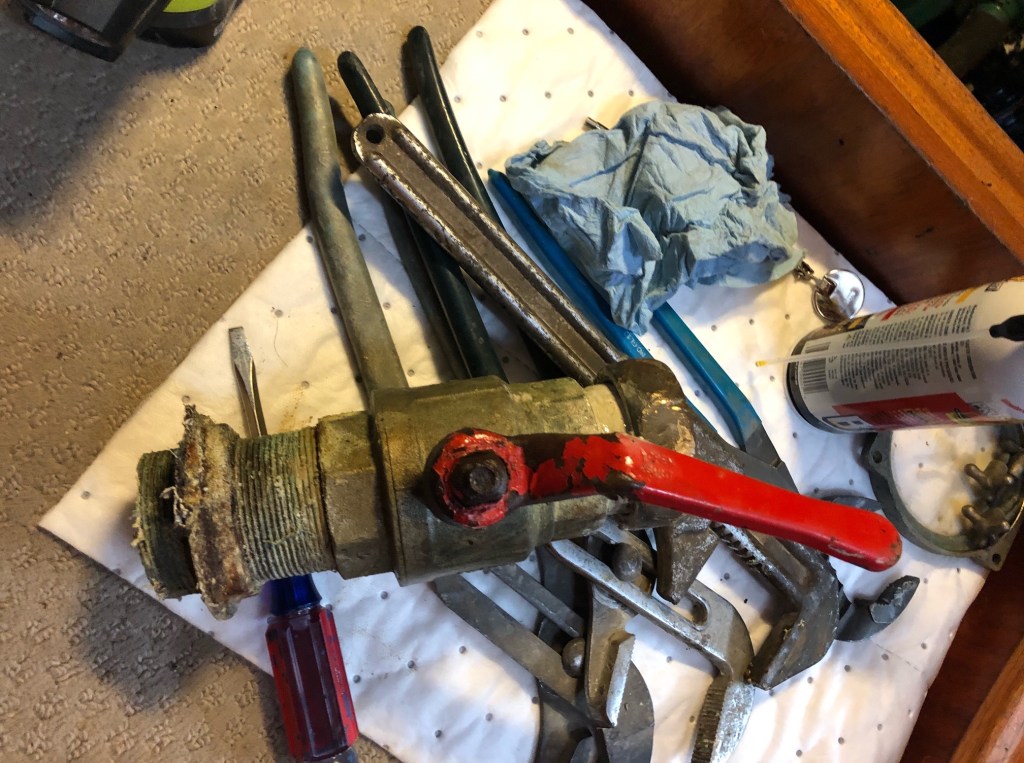
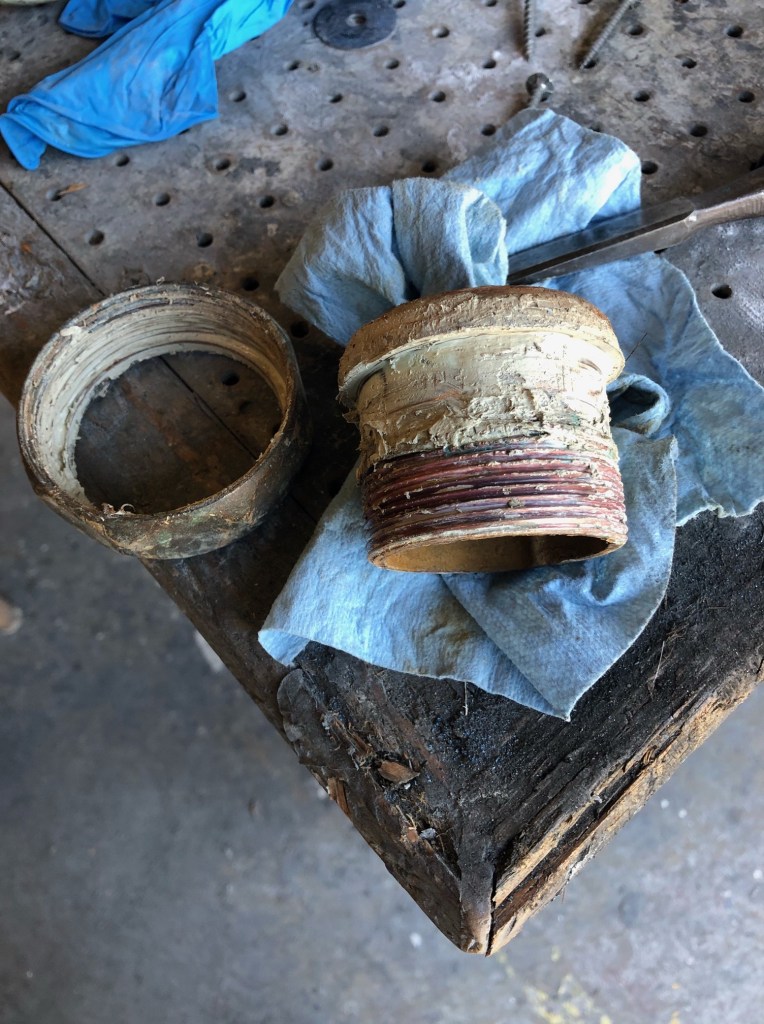
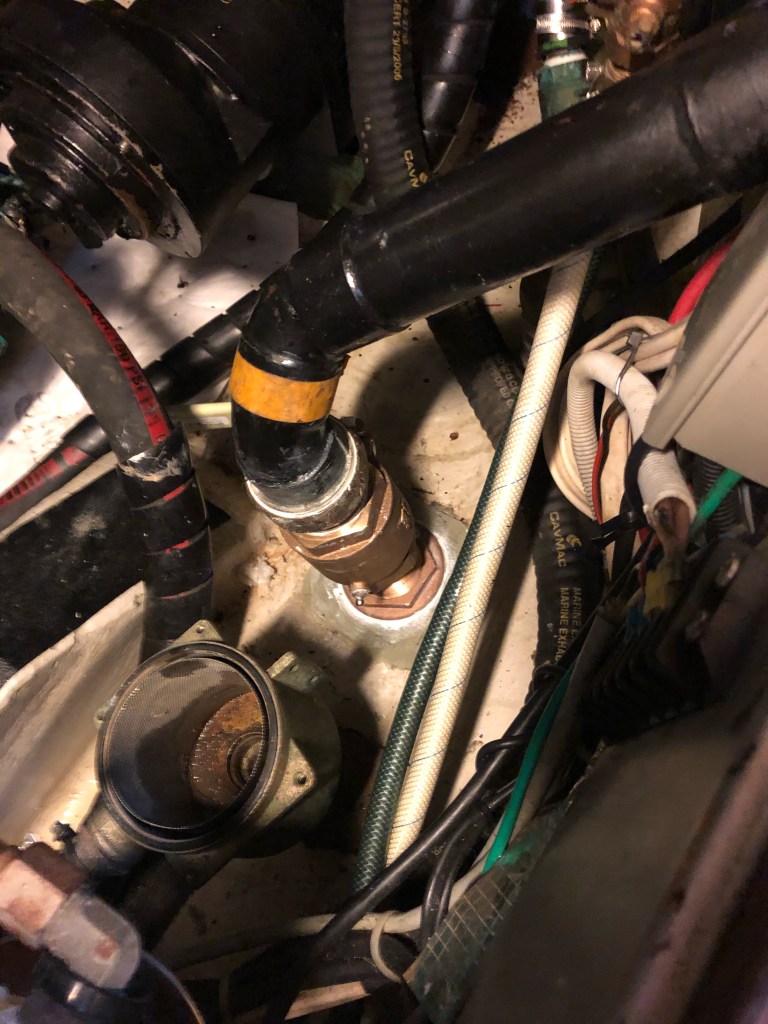
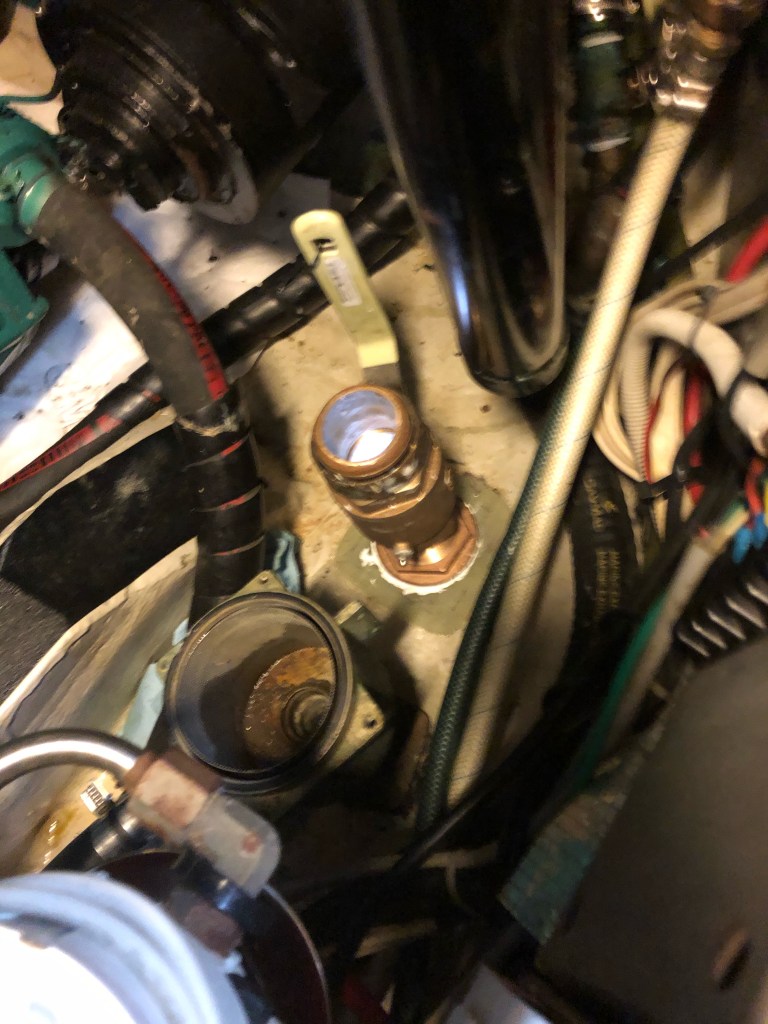
Thruhulls and Inline Valves. We (Ray = “We” throughout this post) exercised all of the thruhulls, and greased them up where we/he could. The portside cockpit drain valve was leaking on both threaded ends. You can see in the picture that the red handle was corroded and bent from trying to stroke the valve. We cut that out and replaced with a 2″ bronze Groco inline valve using 5200 for sealant and a custom multi-layer vacuum-formed fiberglass base shaped to the hull We did the same thing on the starboard side; on that valve, the handle broke off the valve.
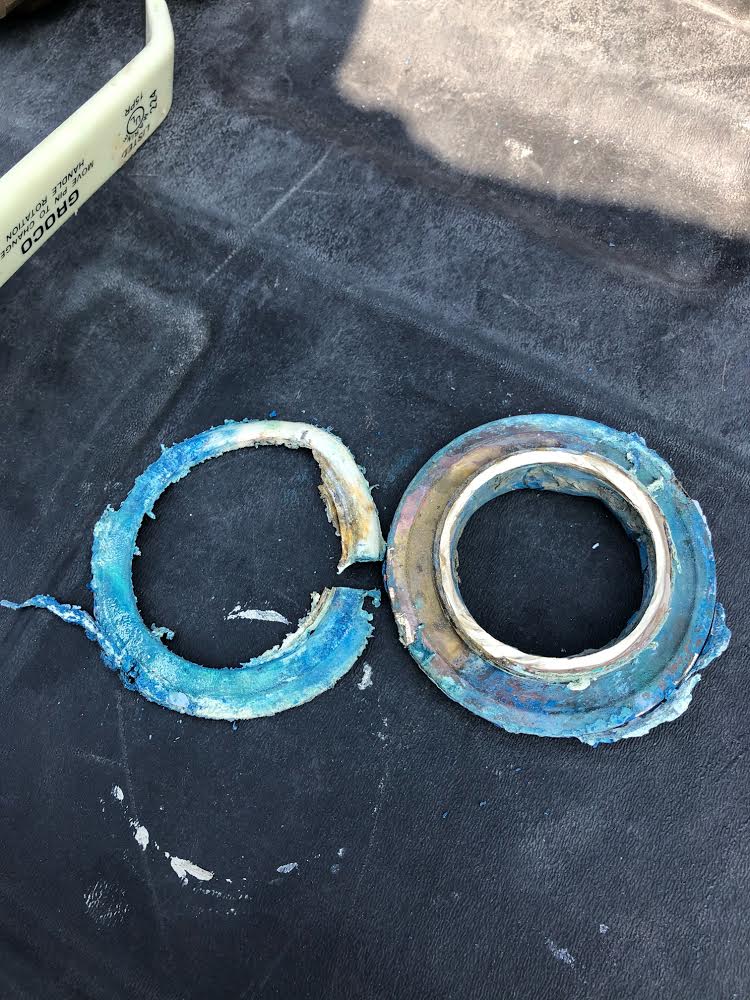
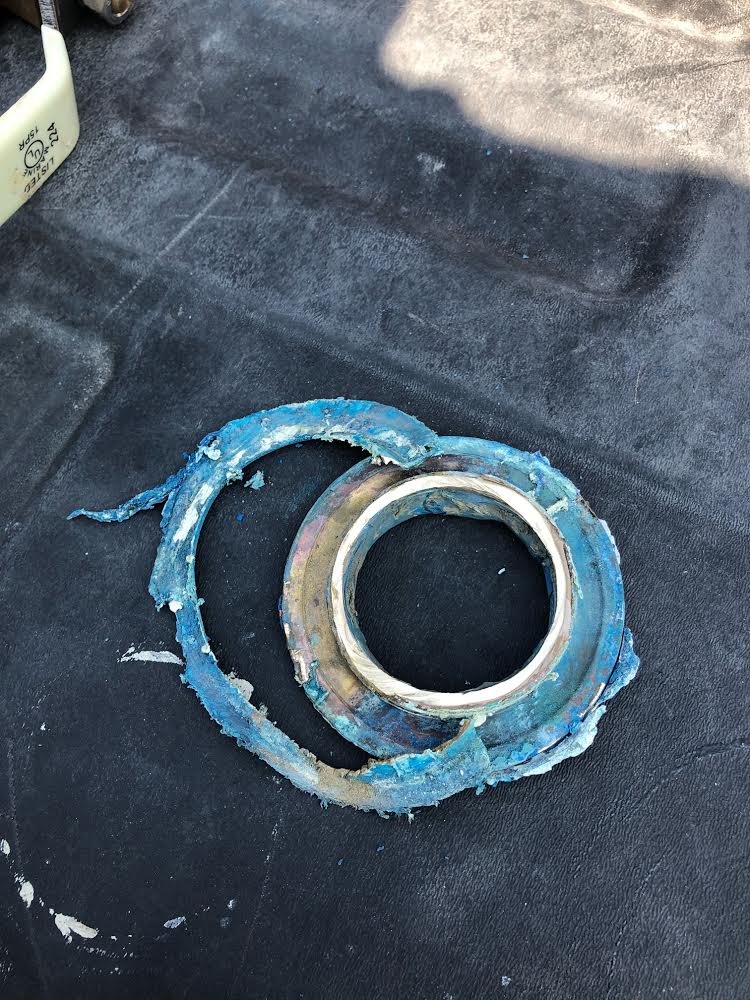
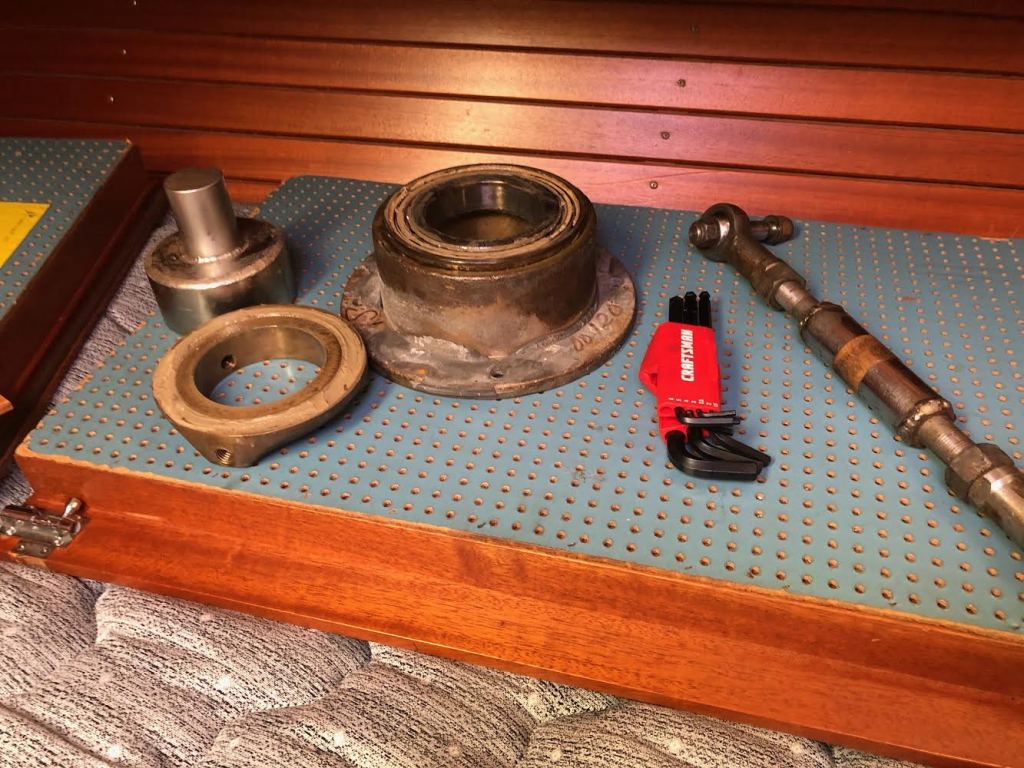
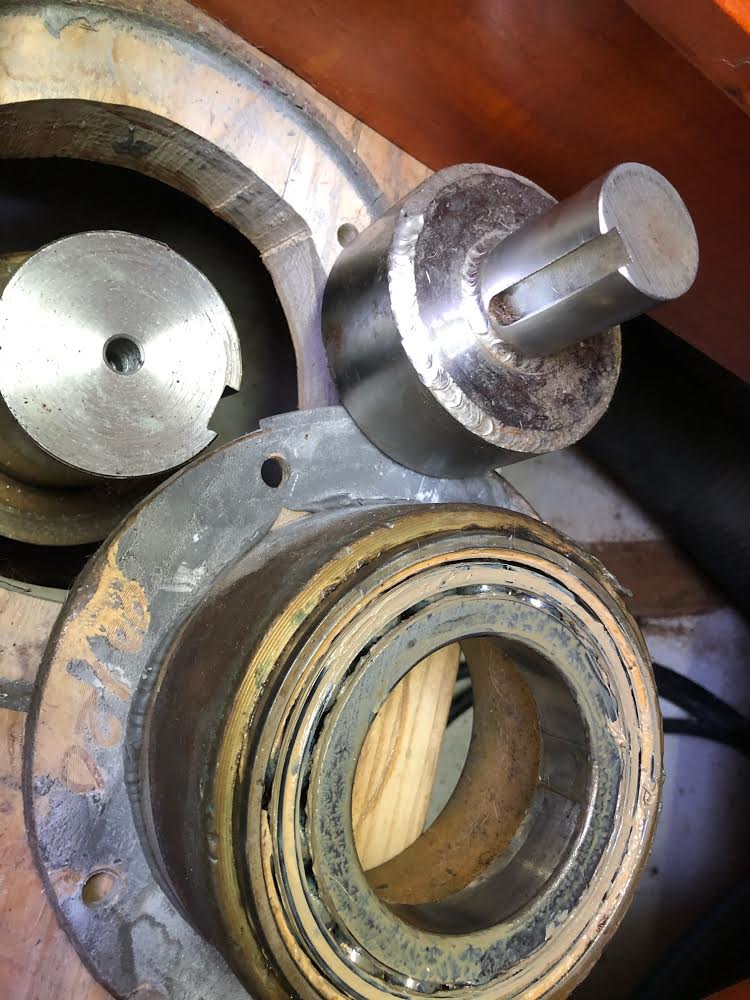
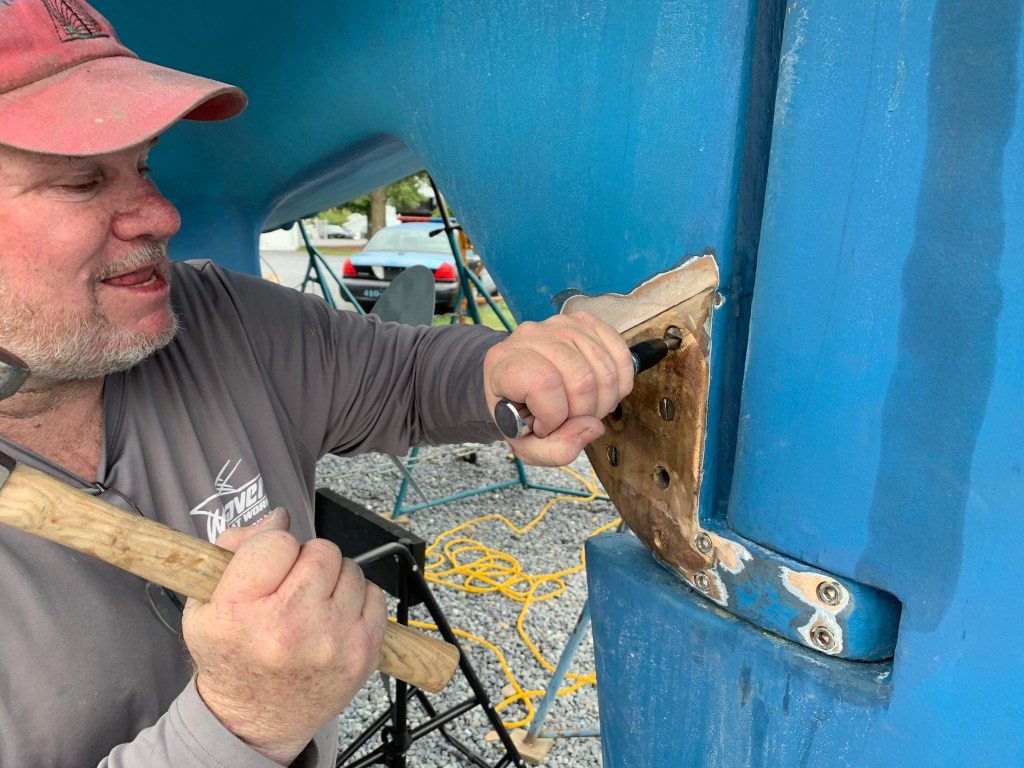
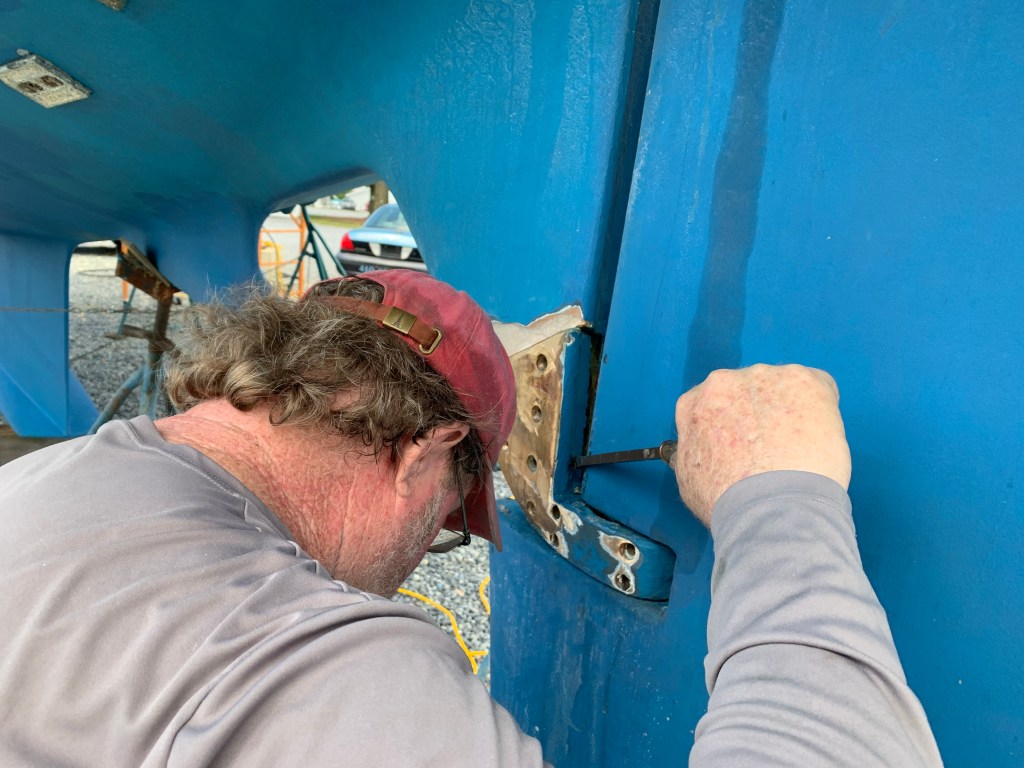
Rudder. We had water in the rudder bilge area. It was “susy” (I recently learned that the slang term for suspicious is susy) to Ray, myself and Rachel. I saw it during the sea trial, but it was written up in the survey as “clean it up and watch”. You must pay very close attention to the observations made or not made in a boat survey. We ended up pulling apart the rudder seals and dropping the rudder completely out of the boat. This revealed that: 1) Whoever did this work in the past installed the lower simmer seal upside down exposing the carbon steel spring directly to the sea water, 2) The decomposing lower simmer seal broke apart and started to score the 80 mm rudder shaft causing what we believe to be unintended friction in the steering system, 3) The upper seal area and the lower skeg housing did not have any grease in them so they were operating dry — so we’ve threaded in places for zerk fittings for future maintenance, and 4) The lower skeg bronze clamshell was secured with some sort of silicone or other chemical that hardened and made it very difficult to remove the regular screwdriver head bolts (also a strange choice from our perspective — this made it nearly impossible to remove the 6 bolts). We are glad we did this investigational work, because had this failed this would have been ugly in the middle of the sea or during a point of sail. Thankfully, Ludvig from HR-Parts was able to send us pictures of how our rudder assembly was designed and built. It was close enough, and he sent me two seals — received in 3 short business days. Thanks, Ludvig!
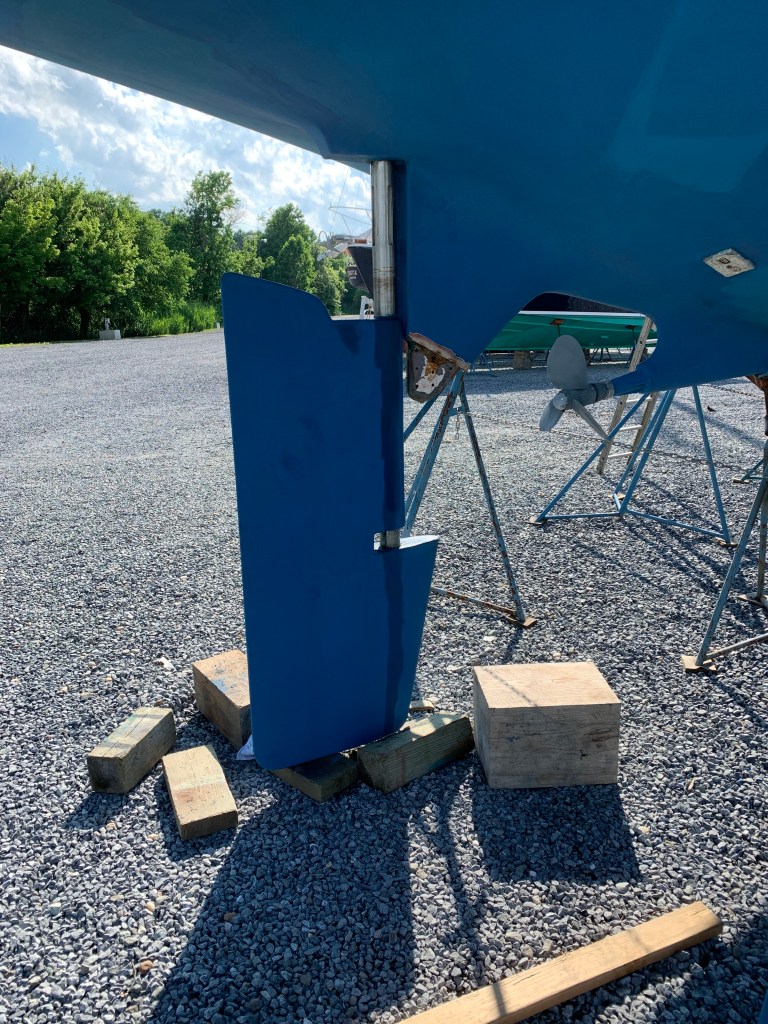
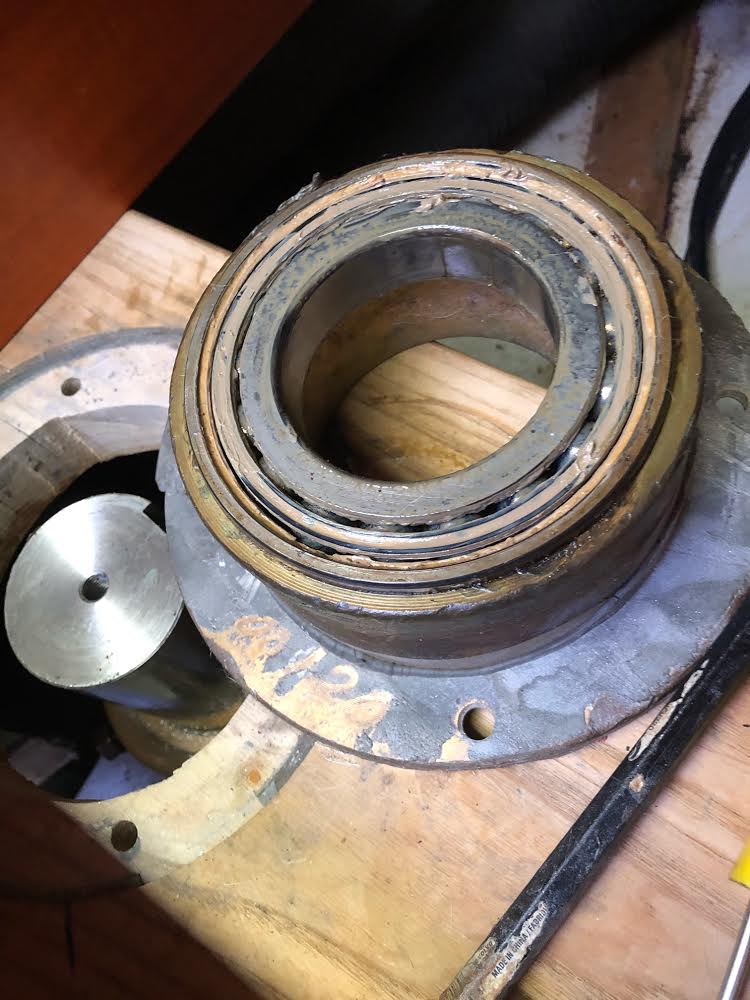
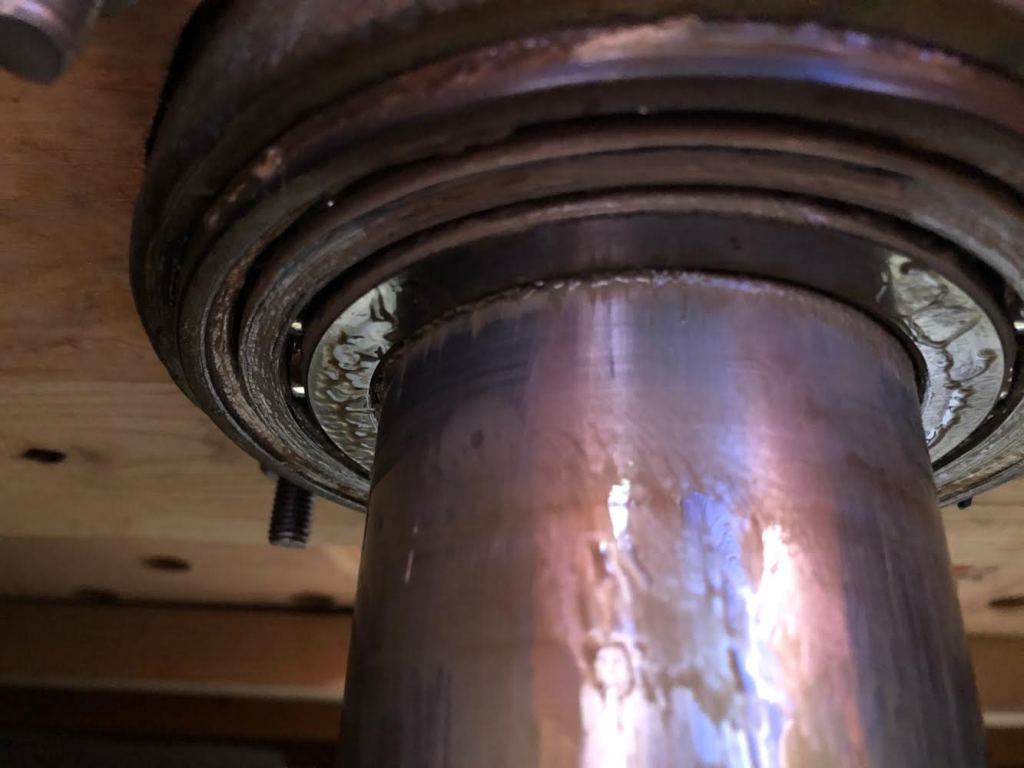
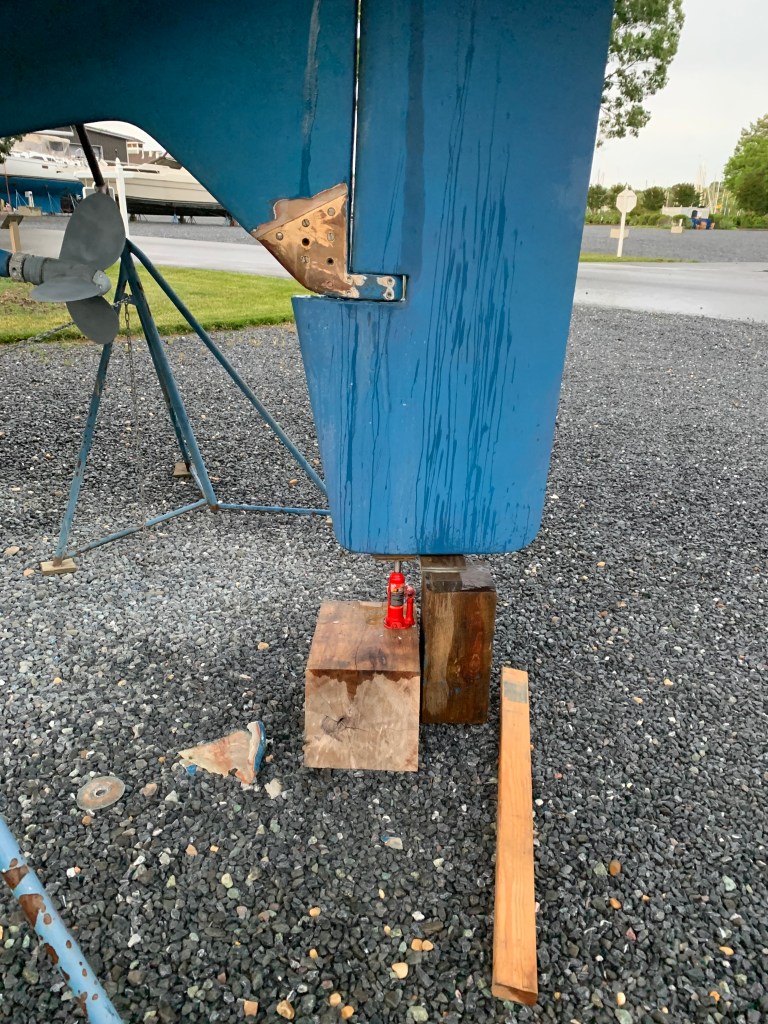
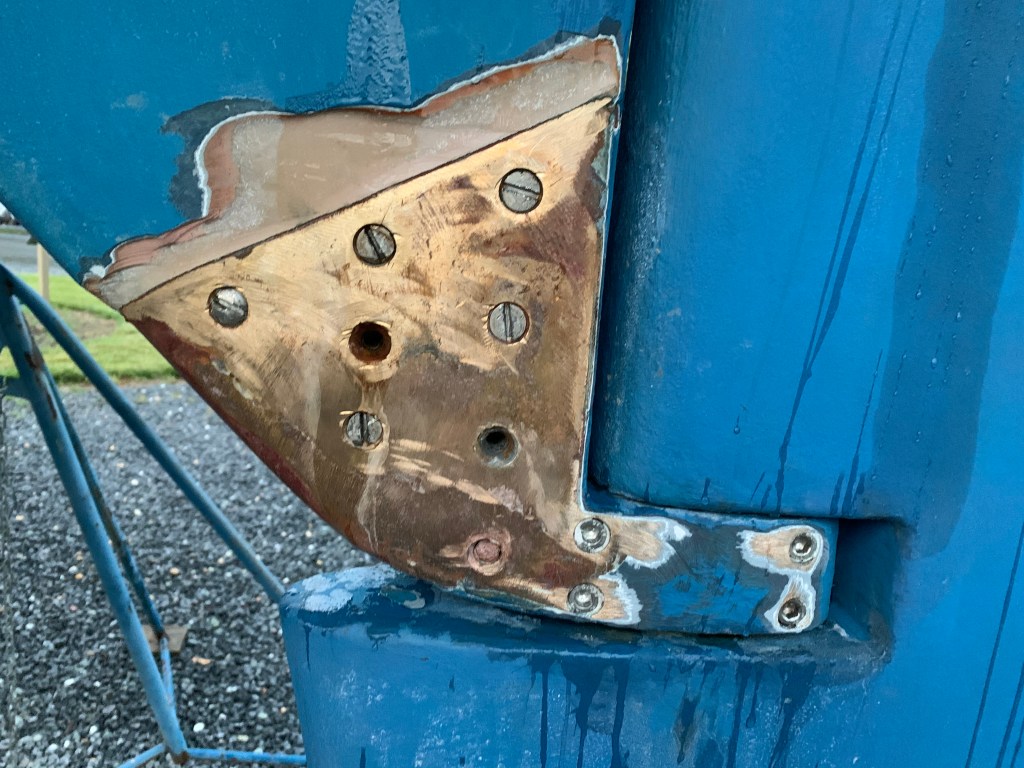
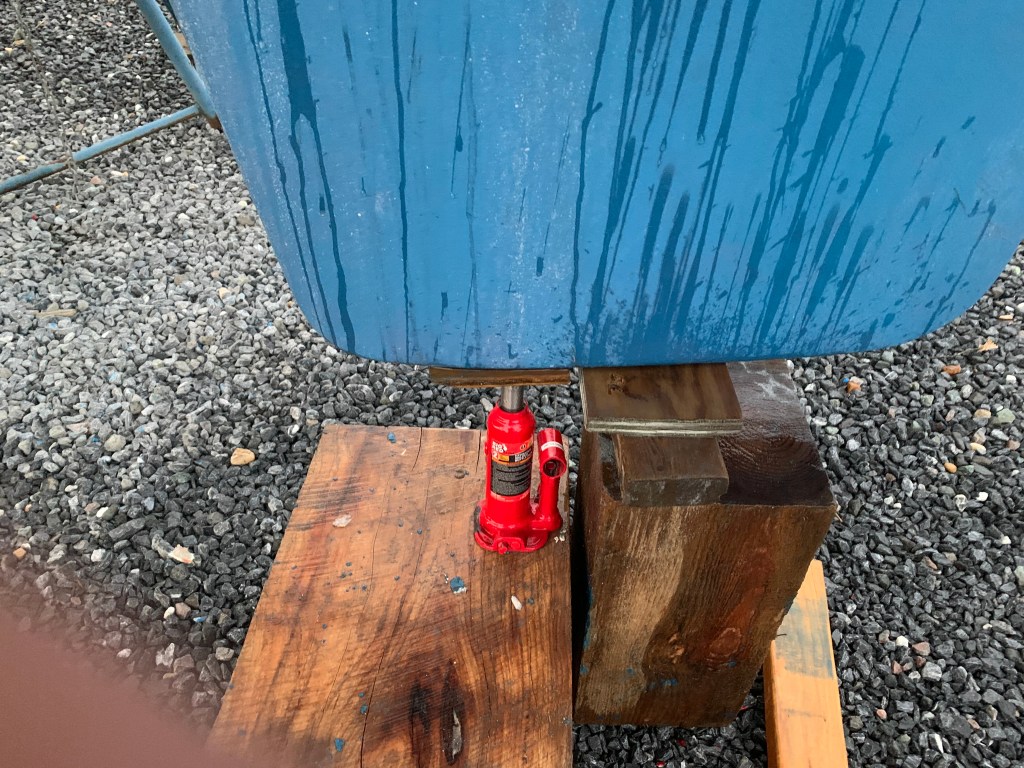
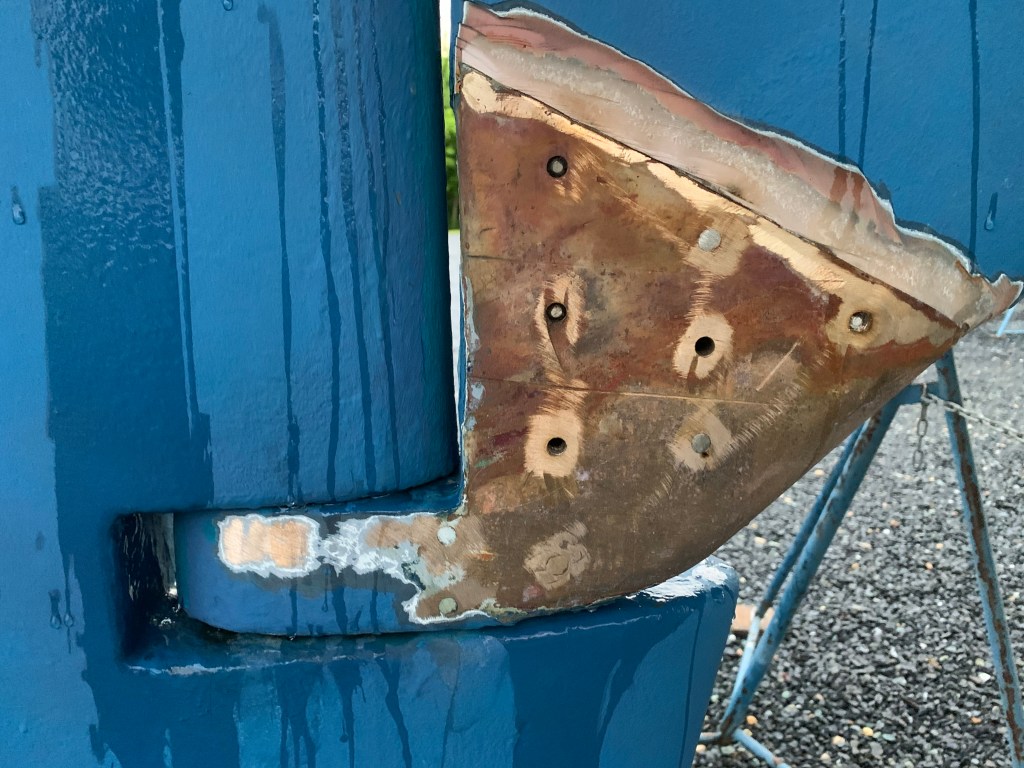
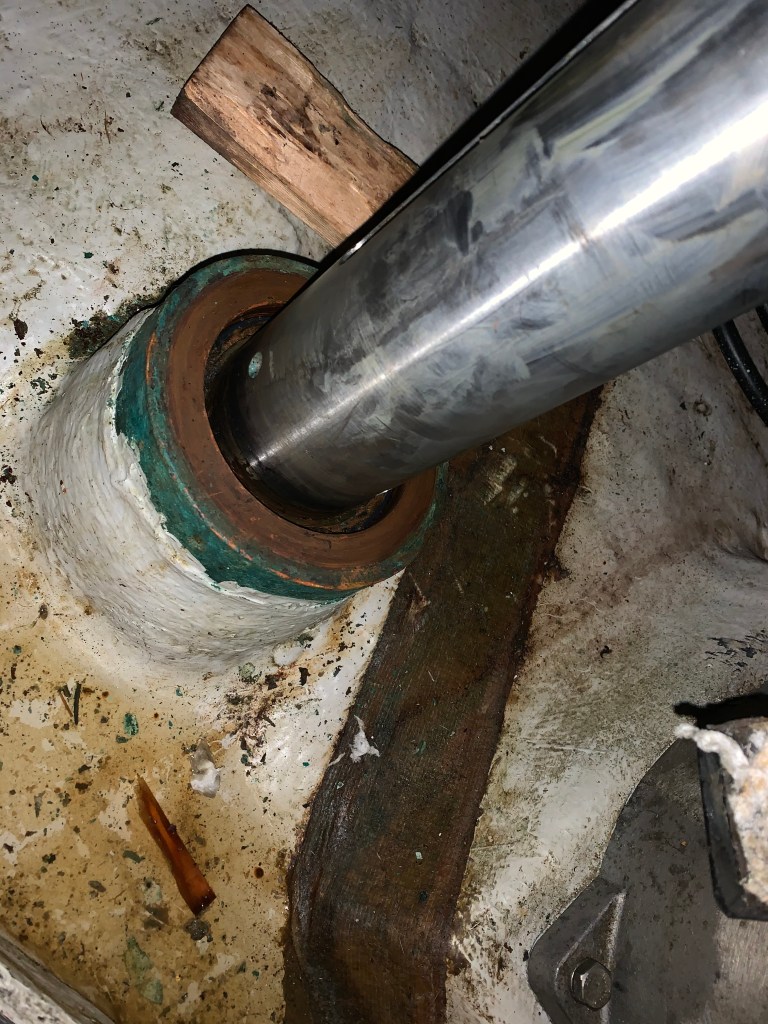
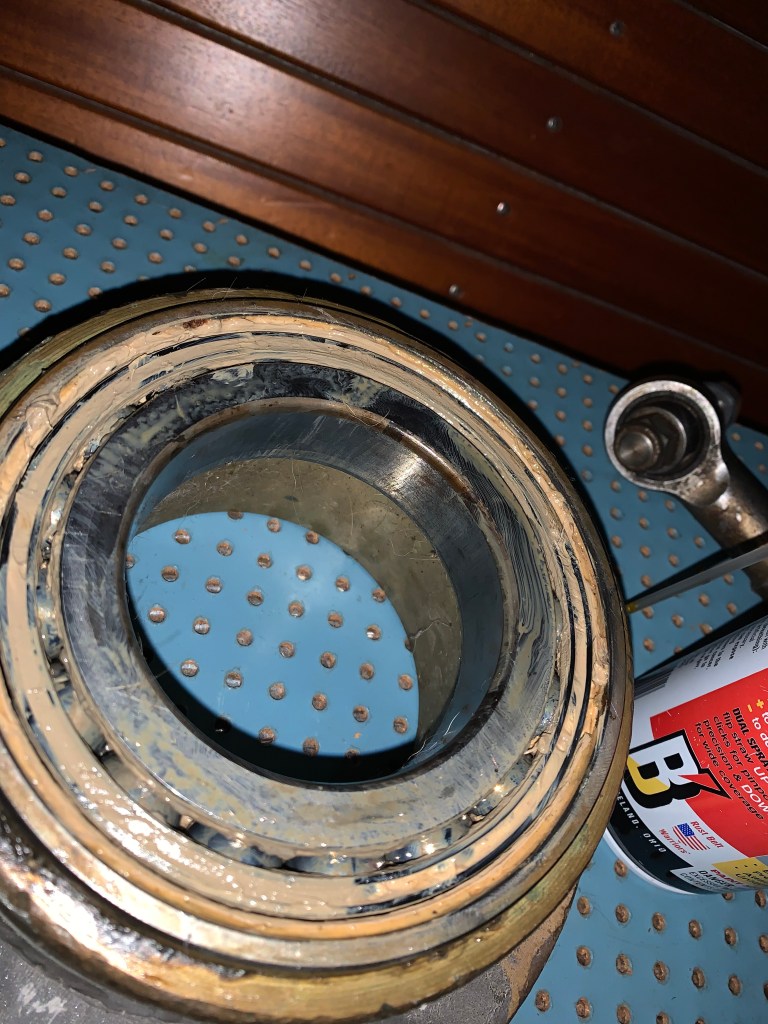
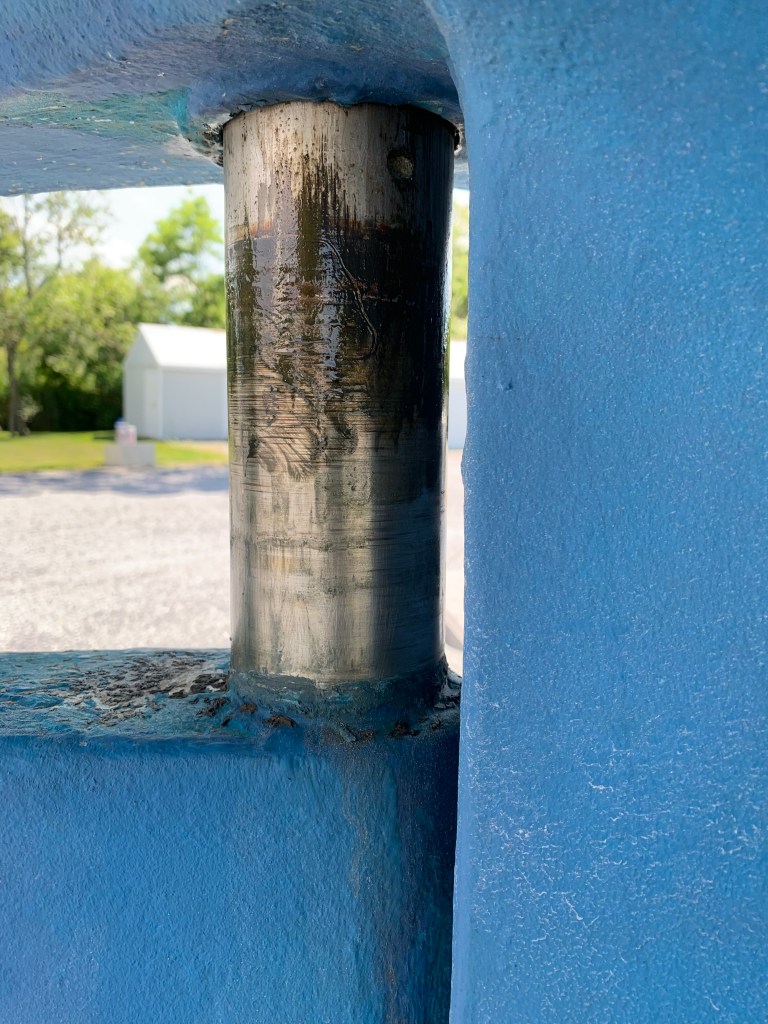
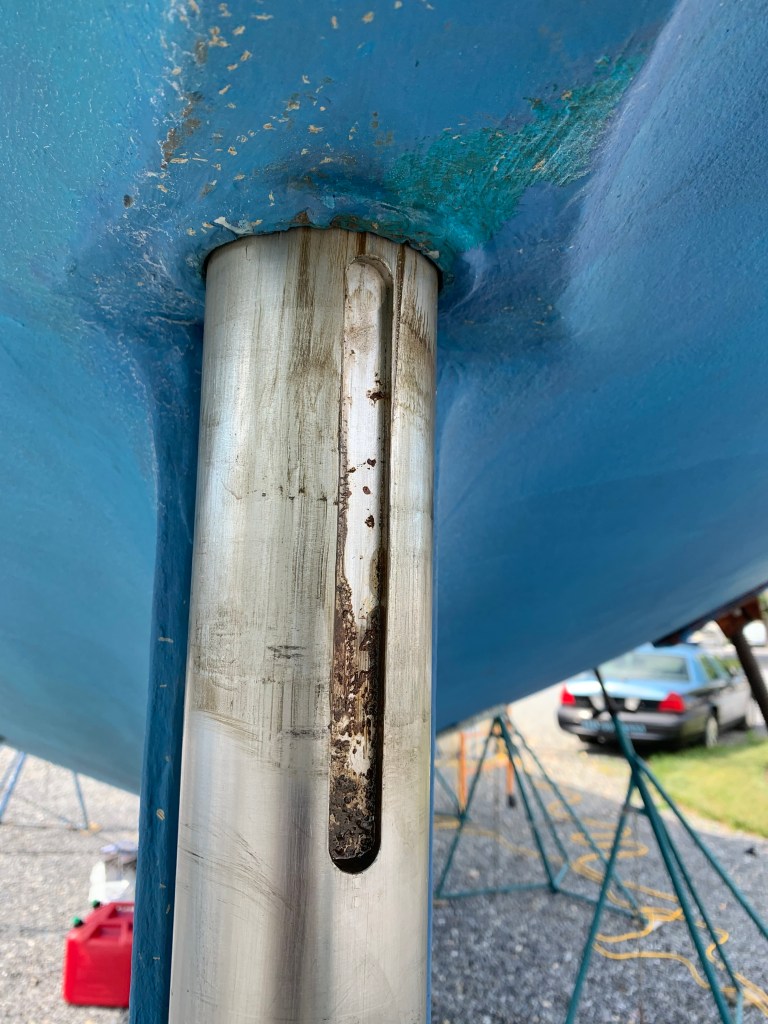
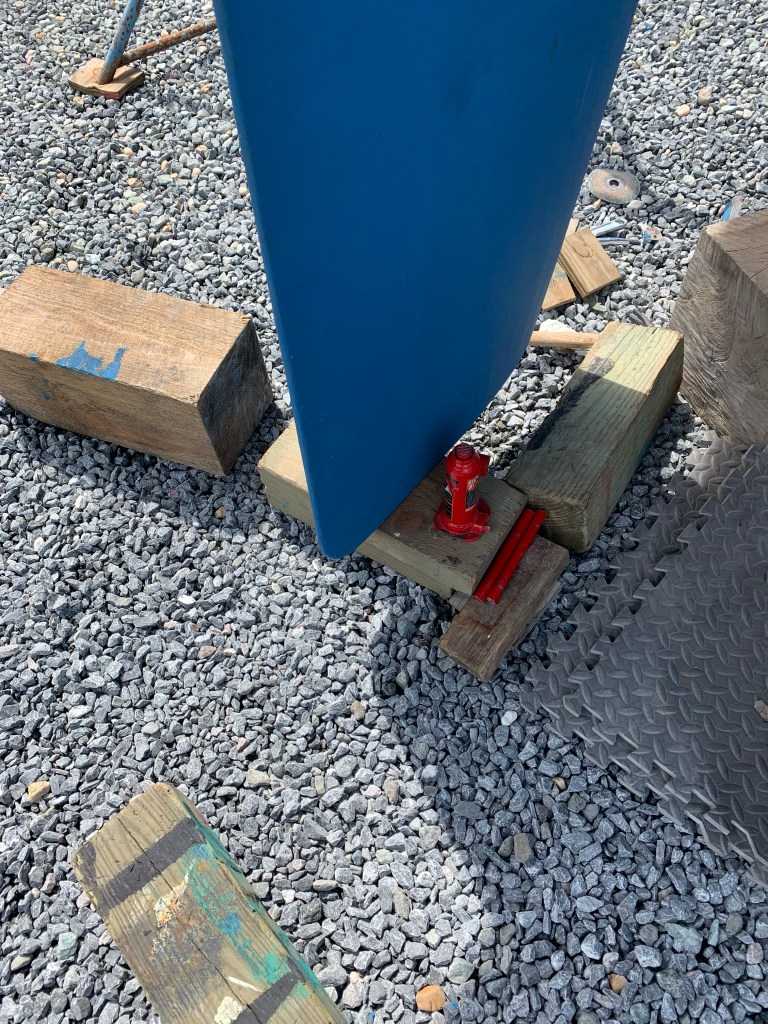
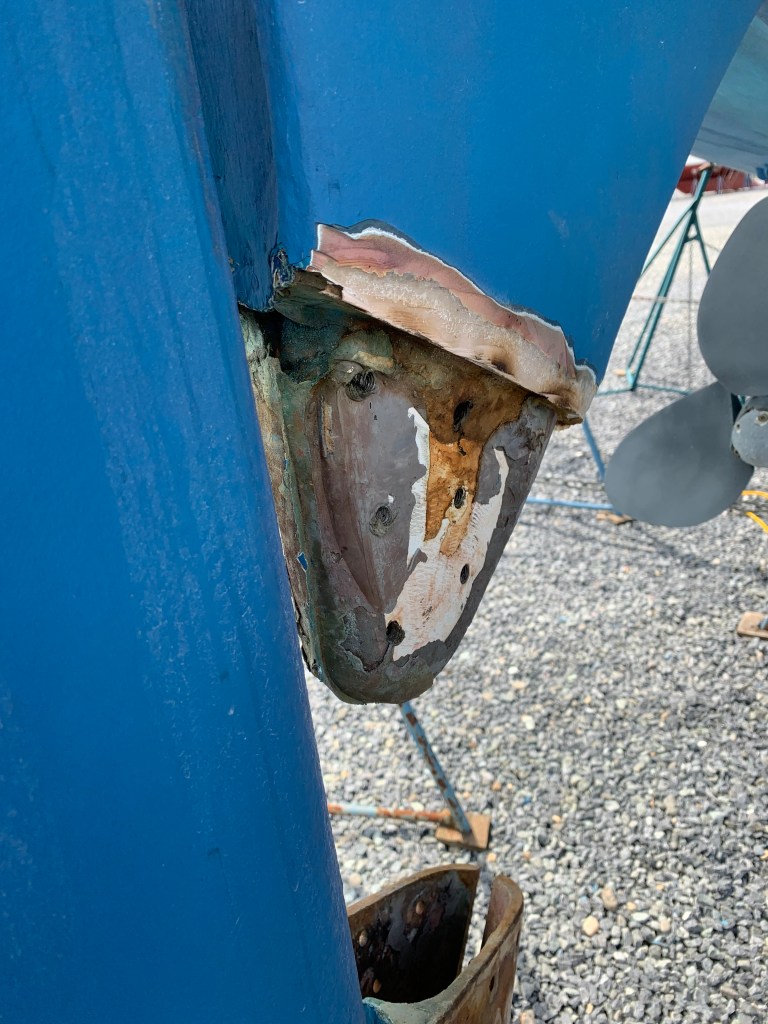
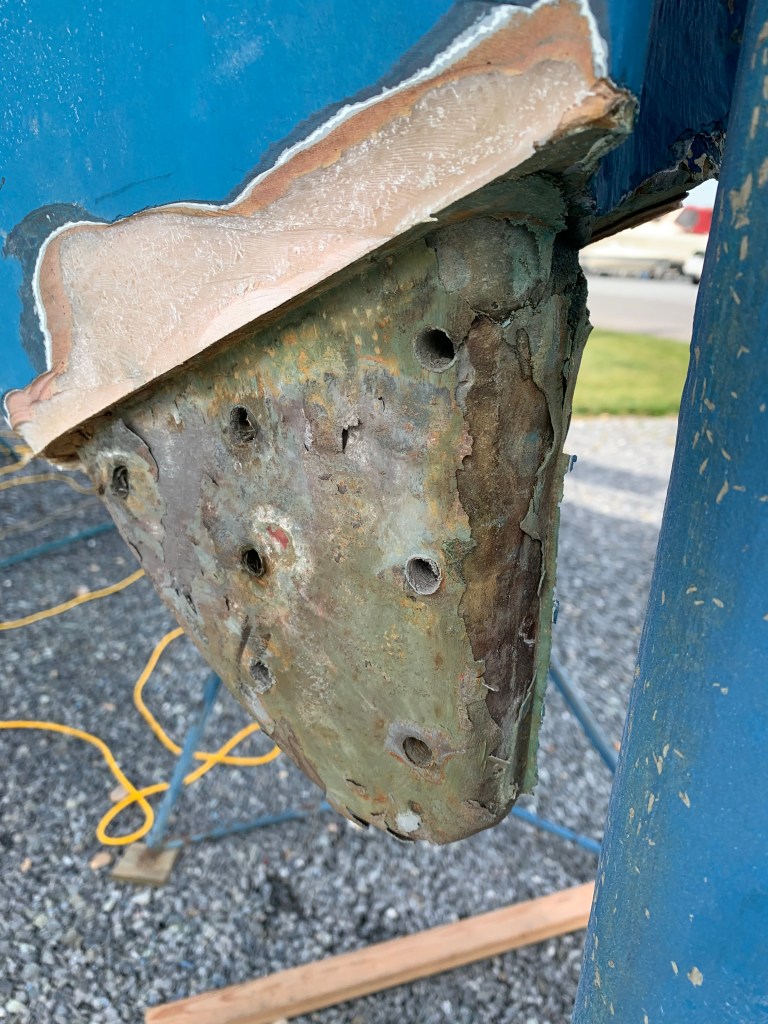
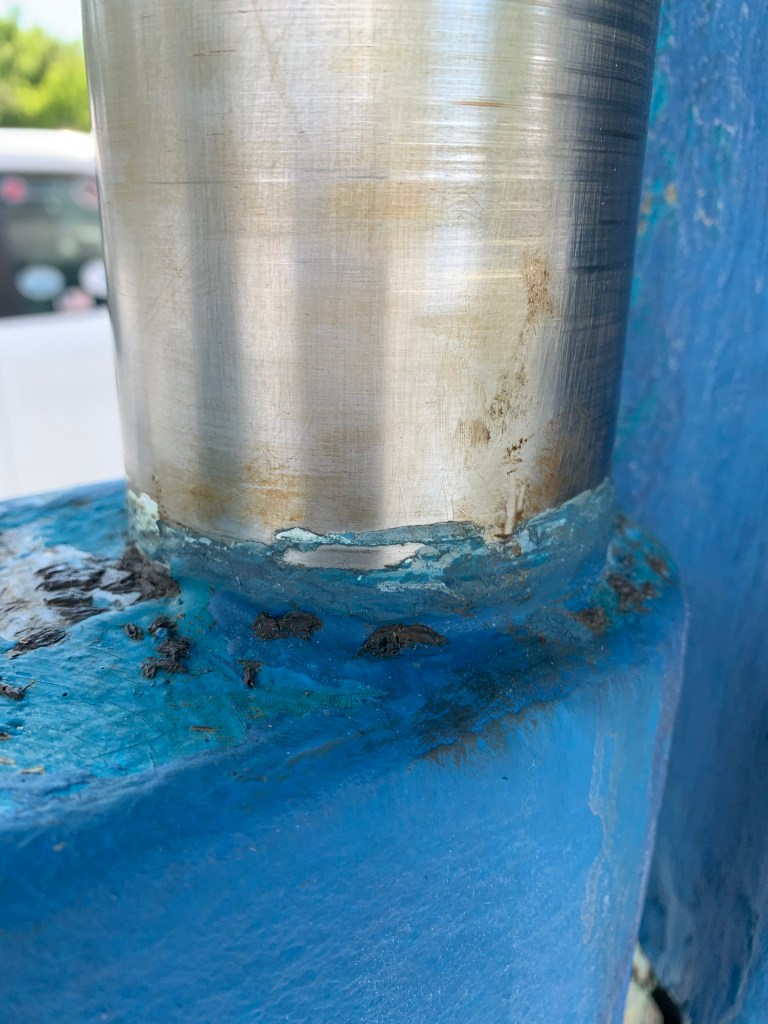
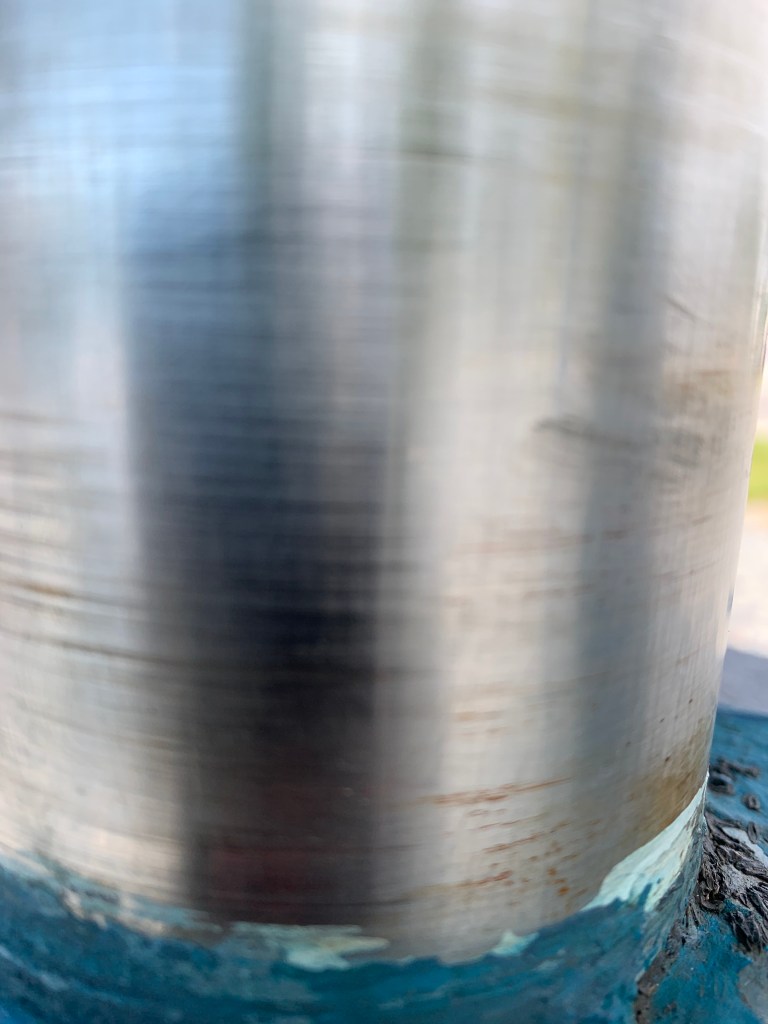
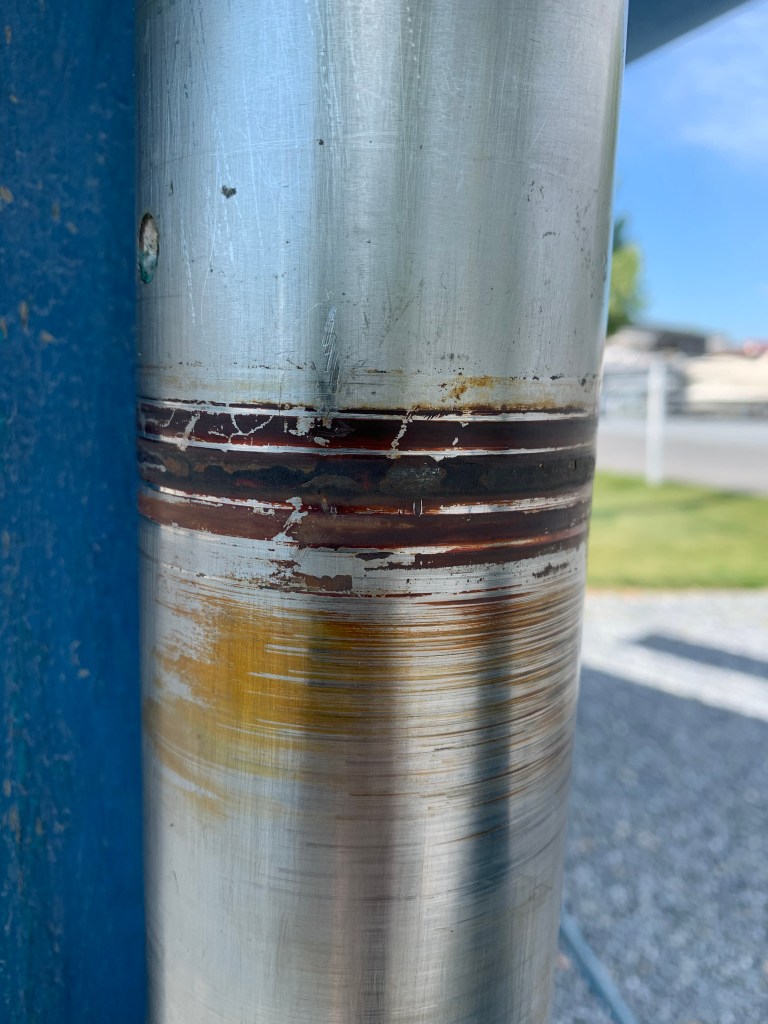
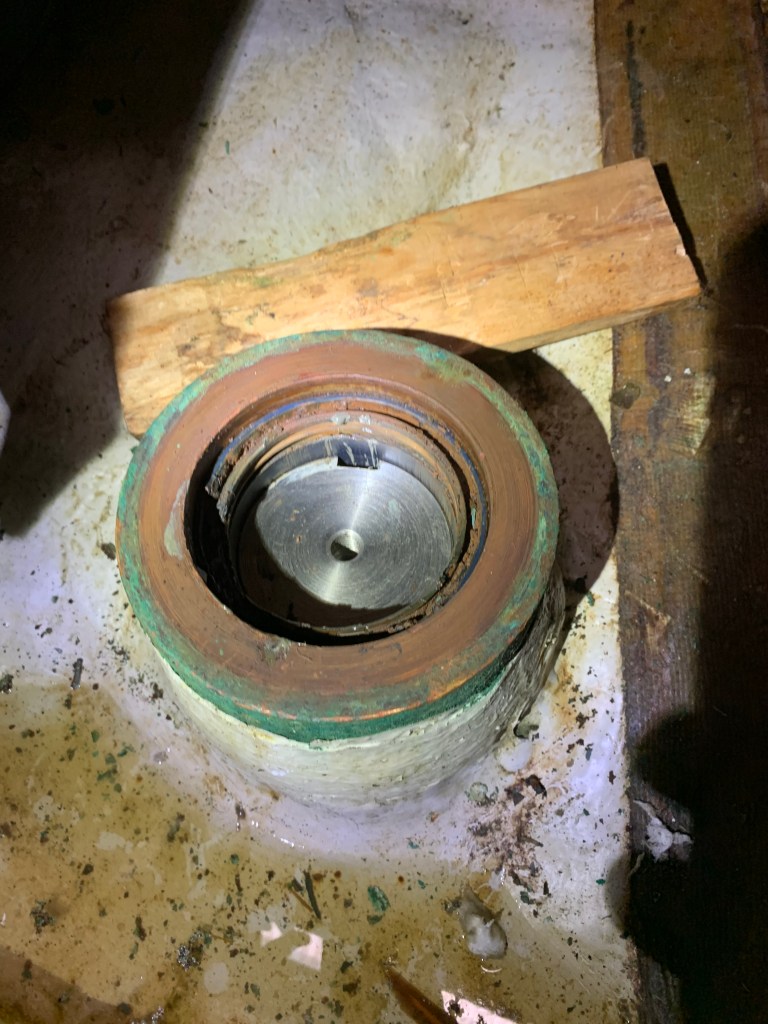
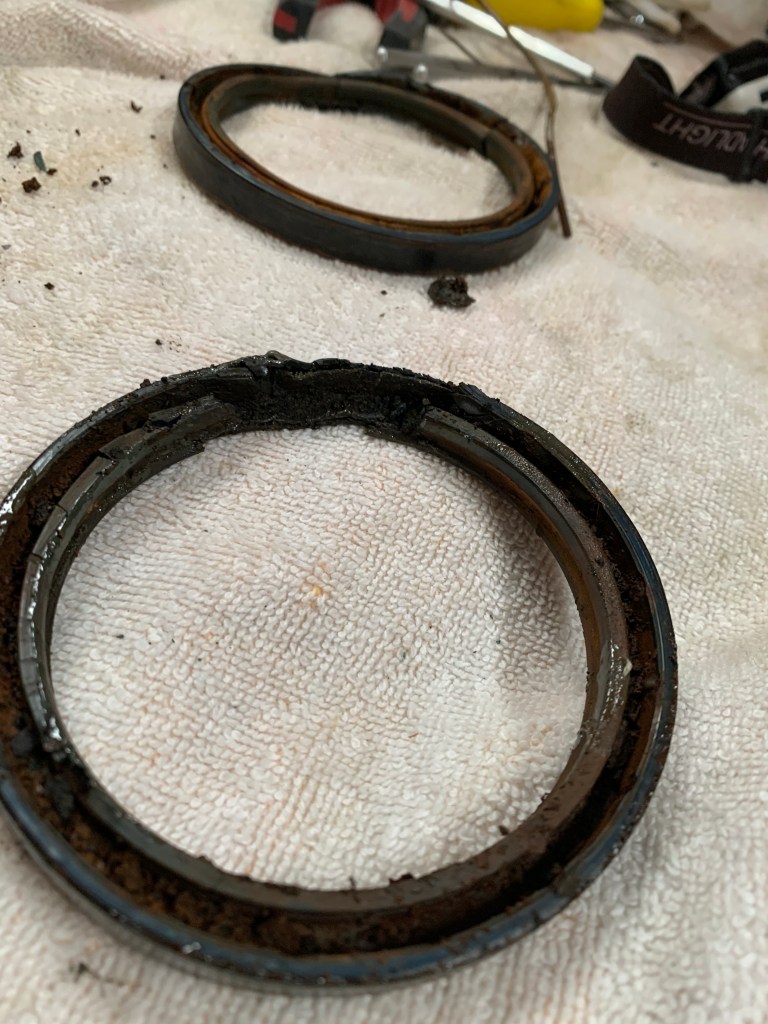
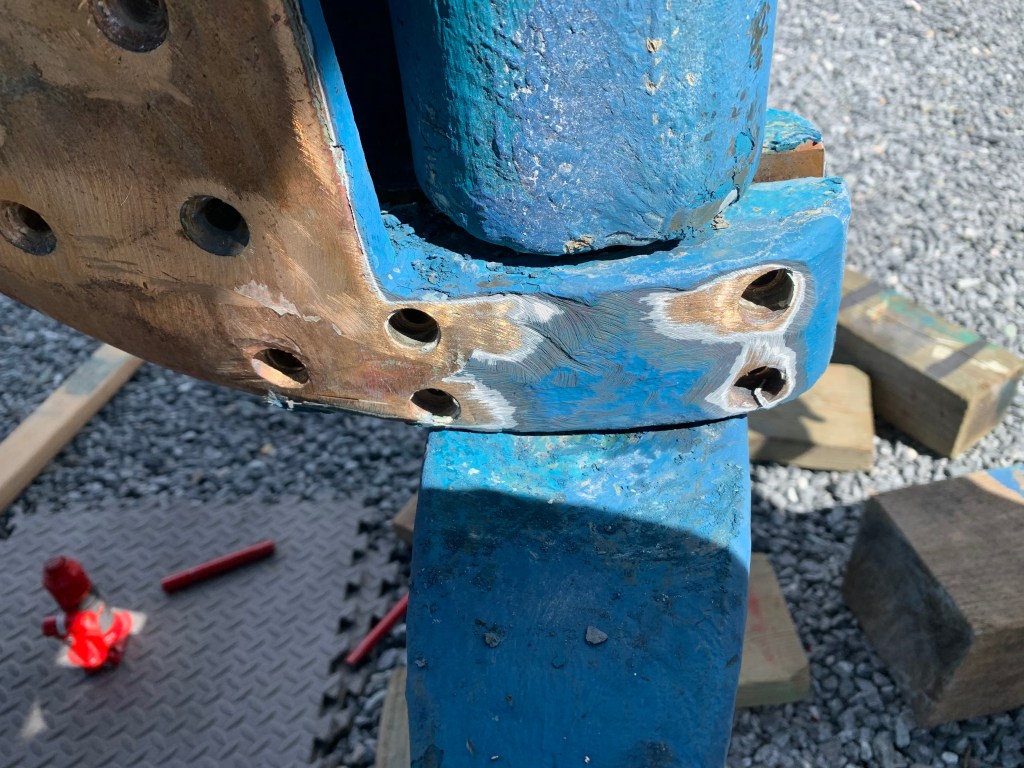
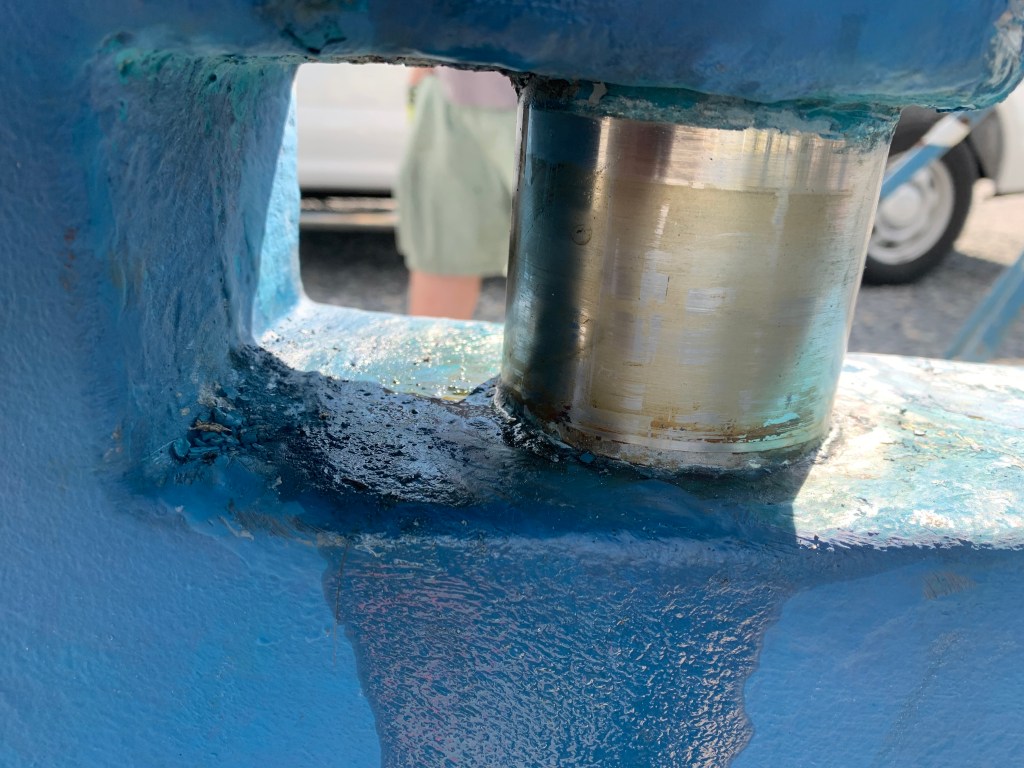
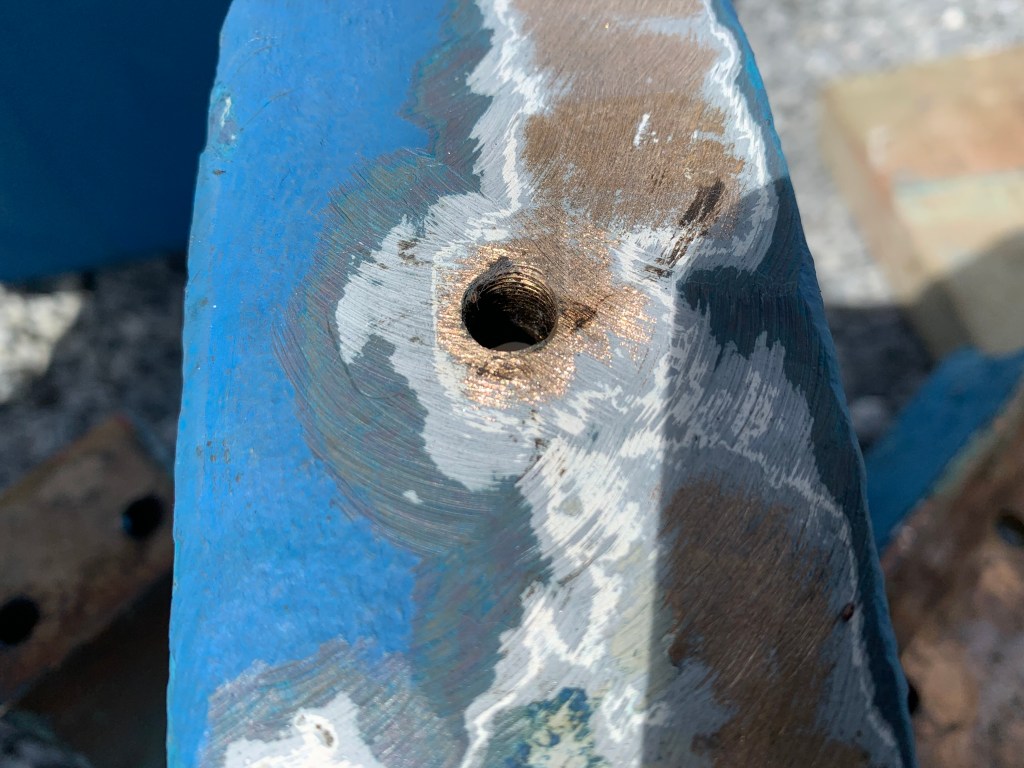
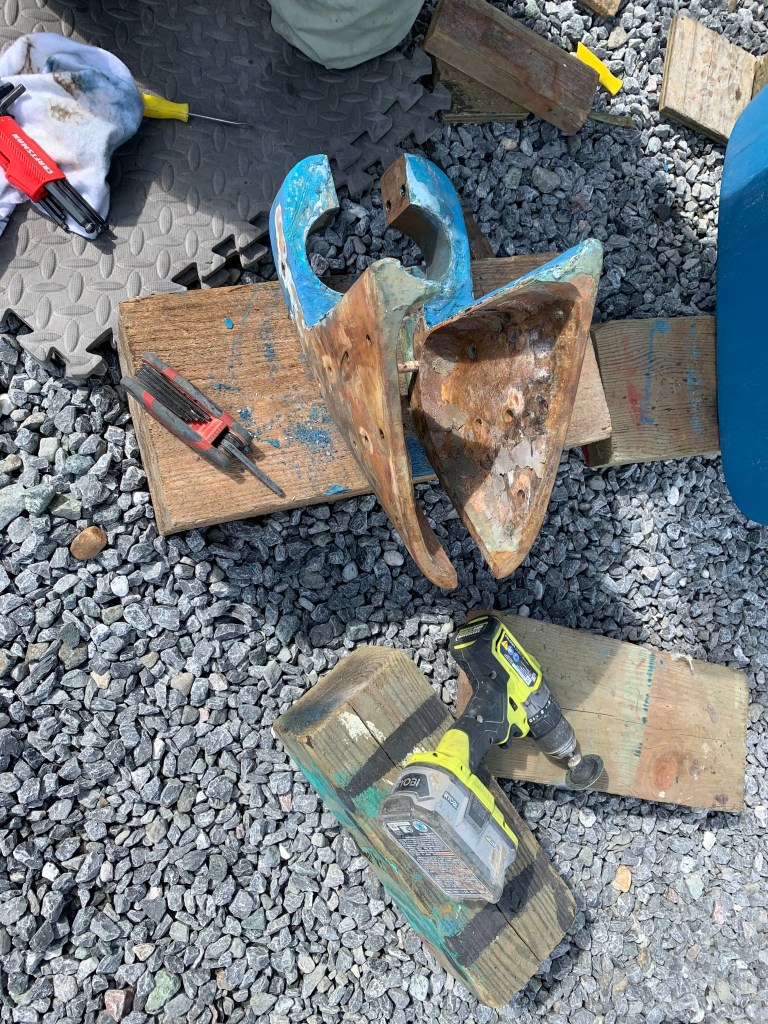
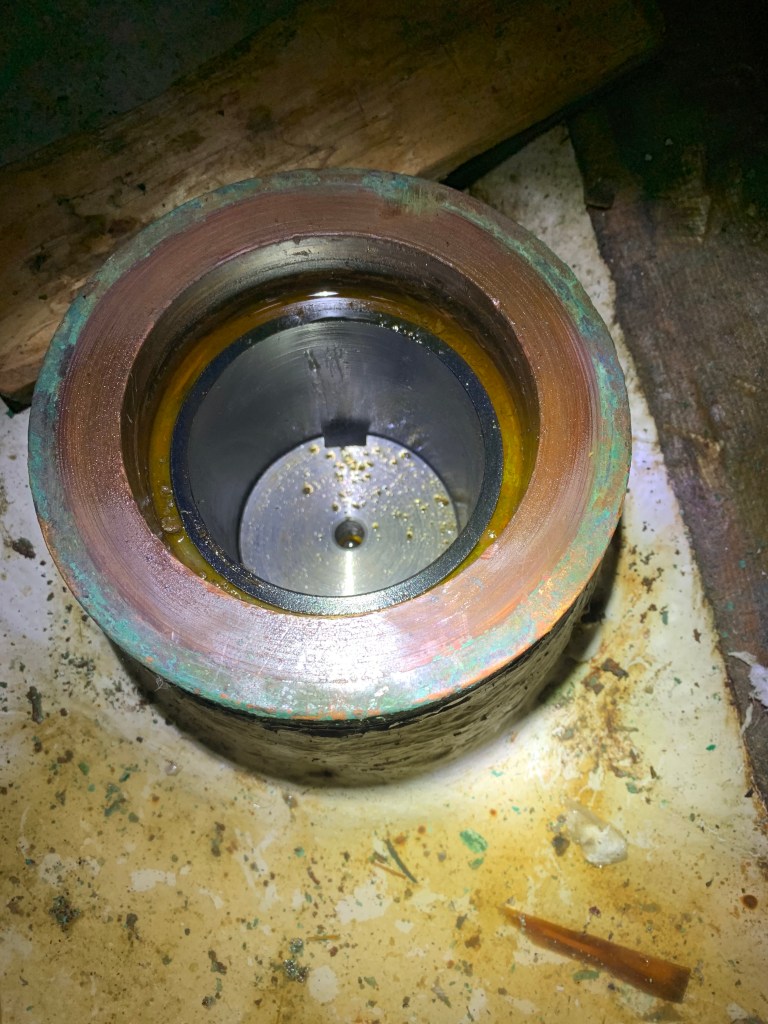
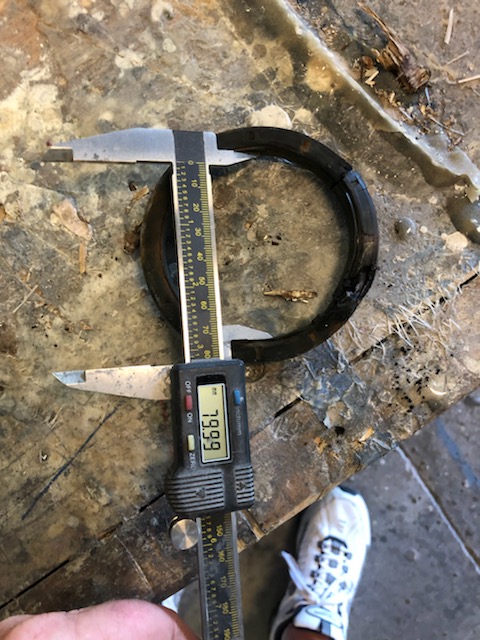
Here is the finished product of the assembled rudder being tested:
Bowthruster. Originally, Ray thought it was simply a loose bolt securing the motor to the boat. Upon further investigation, Ray noticed that the sealant material used inside the bowthruster tube wasn’t marine rated and has started to deteriorate. Ray cleaned it up and put a bead of 5200 around the seal at the based ot the motor inside the tube. Zincs look good, so he re-installed everything.

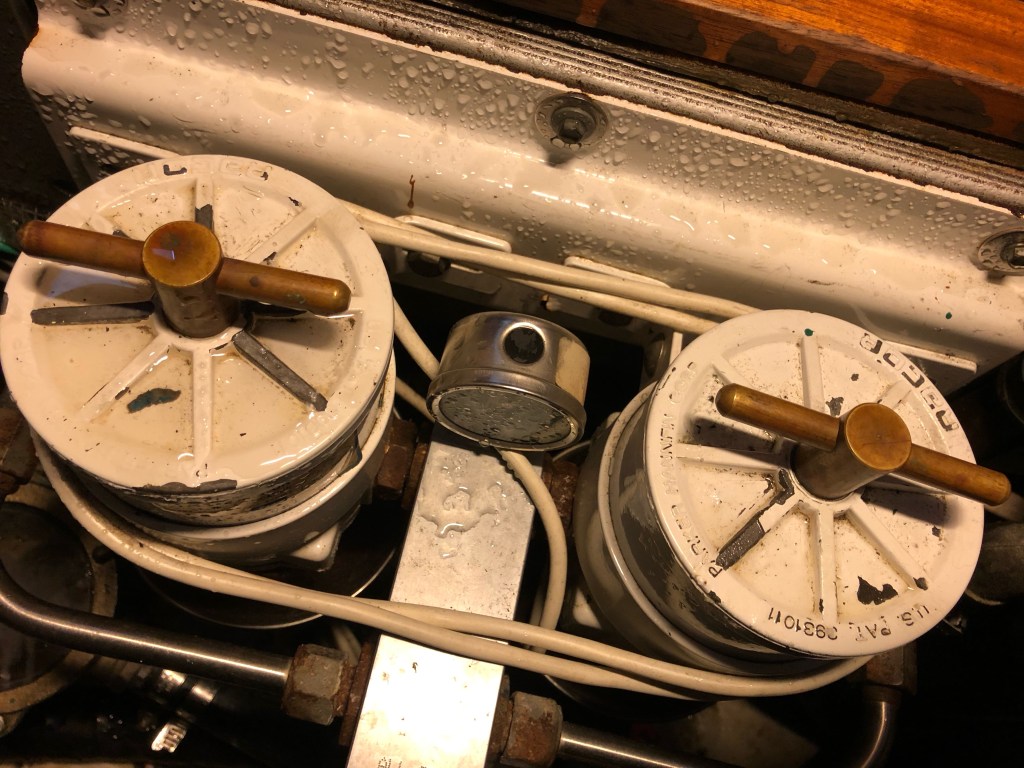
Diesel flush. The engine runs perfectly fine, and the Racor filters for the engine and generator look clean. We thought it would be a good idea since the boat has sat for a while with very few hours to get the fuel polished and both tanks flushed. This required industrial pumps and filters to be brought to the boat by our friends at Shoreline Fuel and Services. They filtered our 190+ gallons of diesel and found some algae and other solids. They also noticed that although our diesel was smelling fine, that the diesel viscosity was thinning and is an indication that this diesel needs to be consumed in short order before it is no longer useful. The risk is that we could wash out a cylinder. We all agreed a good measure to remove 40 gallons of this diesel and to replace it with another 40 gallons of fresh diesel. Then they went to Glen’s boat and cleaned and polished his tanks in the same manner. This is simply just good insurance. The last thing we want to do it start going out to sea and getting any unknown buildup in the tanks sloshing around and then plugging a pickup screen or Racor.
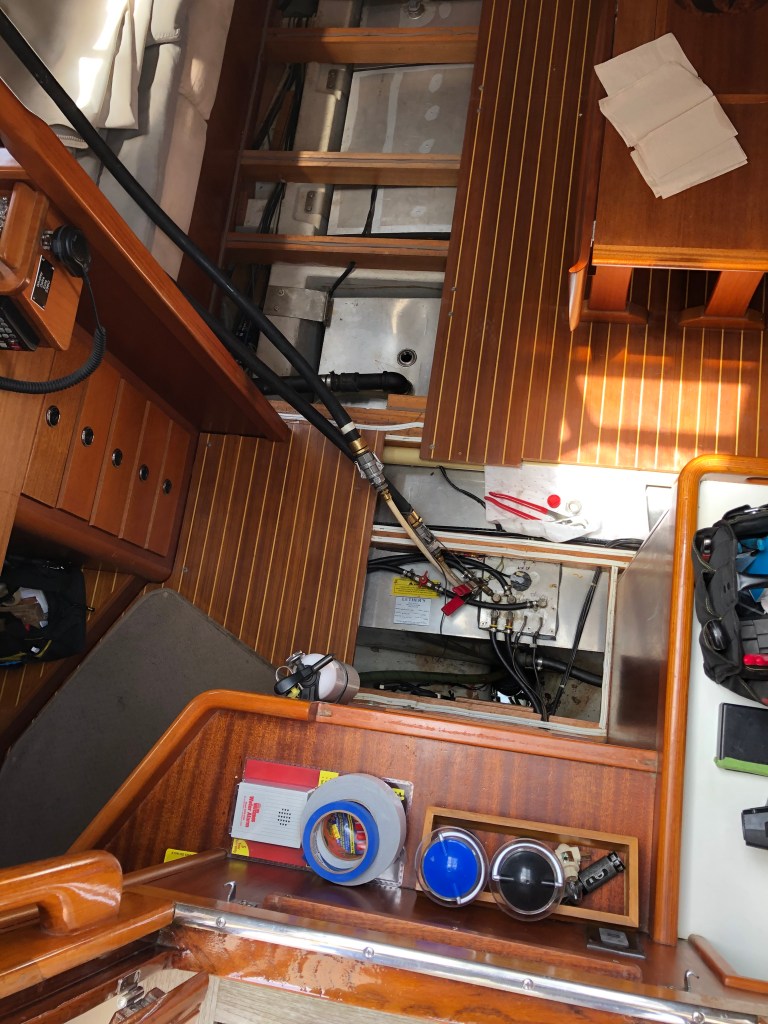
Does the dinghy motor work? Yep. We dropped it from the aft deck using the dinghy davit and connected it to a gas tank with water for coolant. No problems there, this 15hp Tohatsu started on the first pull.
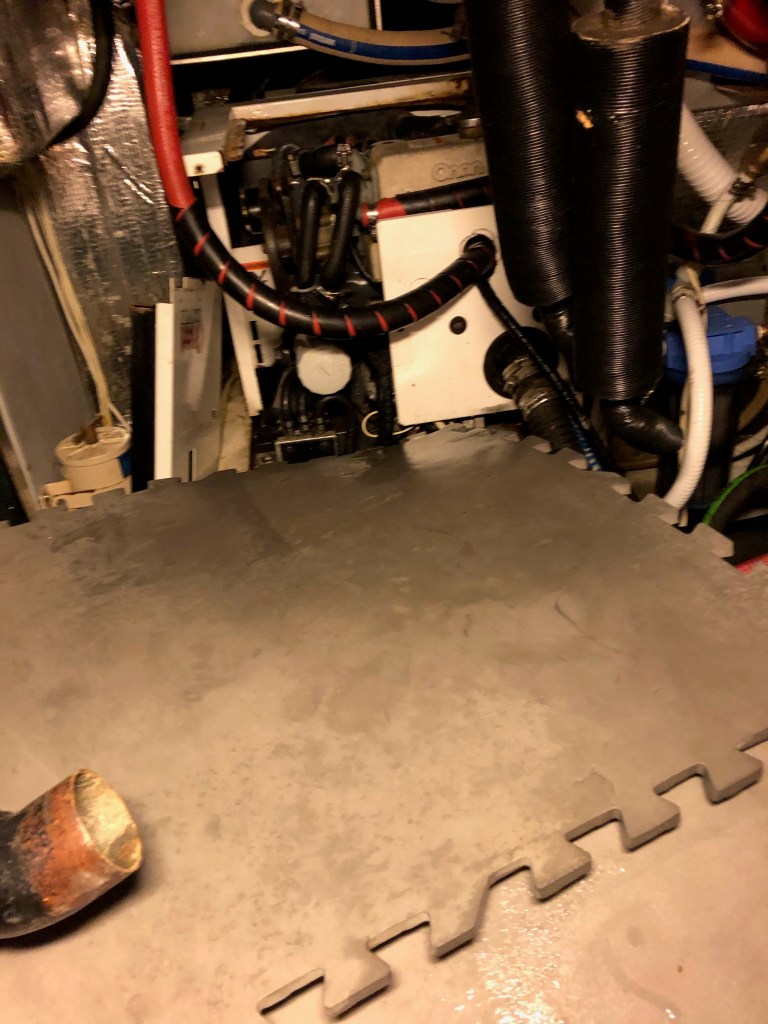
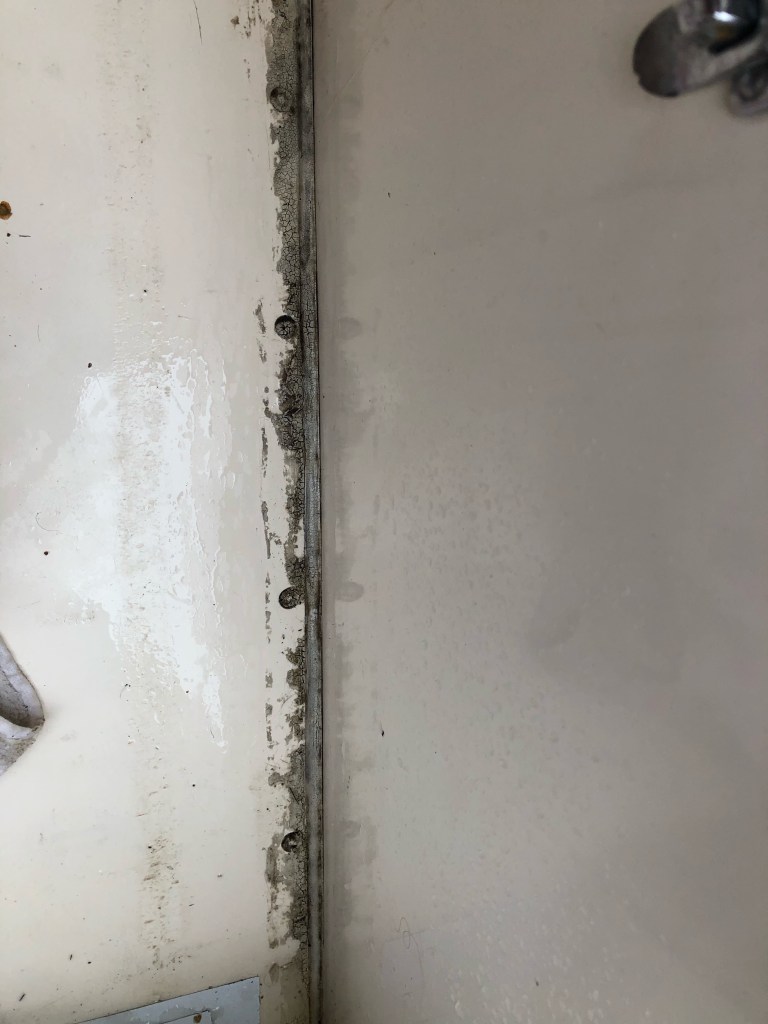
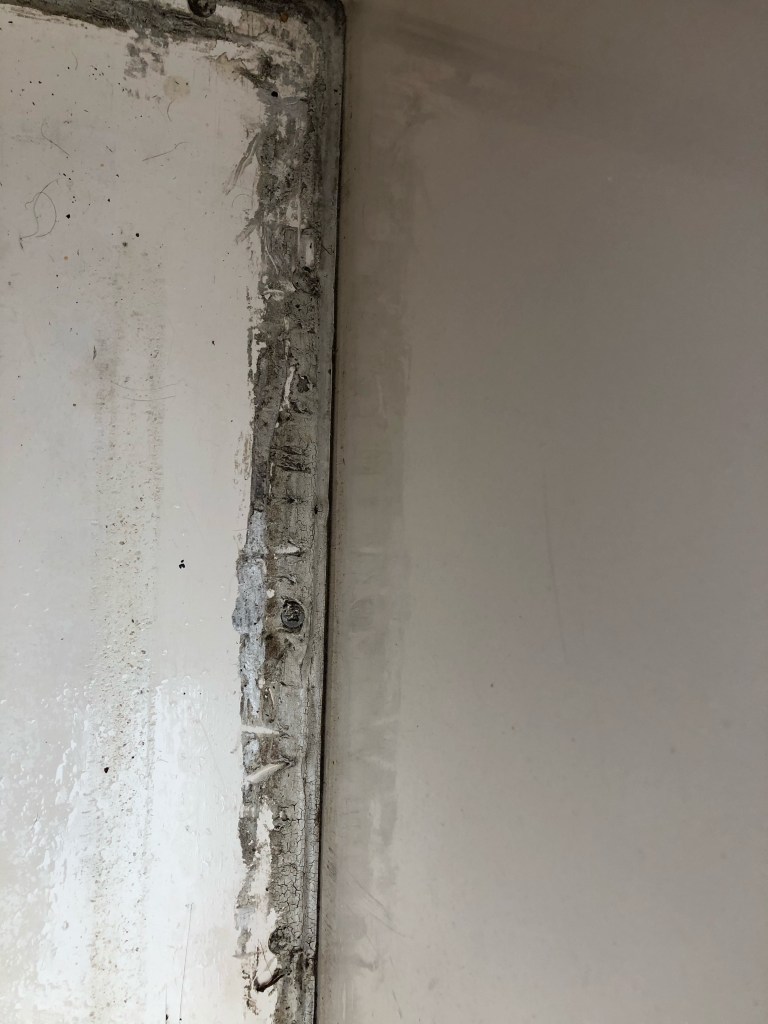
Cockpit removable hatch. Ray figured out why there was so much corrosion on the generator shields and other areas of the engine compartment. During a rain event, Ray returned to the boat to install one of the thruhulls and noticed that it was raining inside the engine compartment. He traced it back to a leaking removable hatch in the cockpit. This hatch is engineered into the design of the boat by Hallberg-Rassy. It is told that everything on the boat can come through the companionway or the cockpit removable hatch. We suspect (“susy”) that the people that installed the generator 15 years ago didn’t seal up this cockpit hatch properly, and it has been slowly leaking causing corrosion issues. No time to fix this properly now, so we put down some tape and we will tackle this another day!
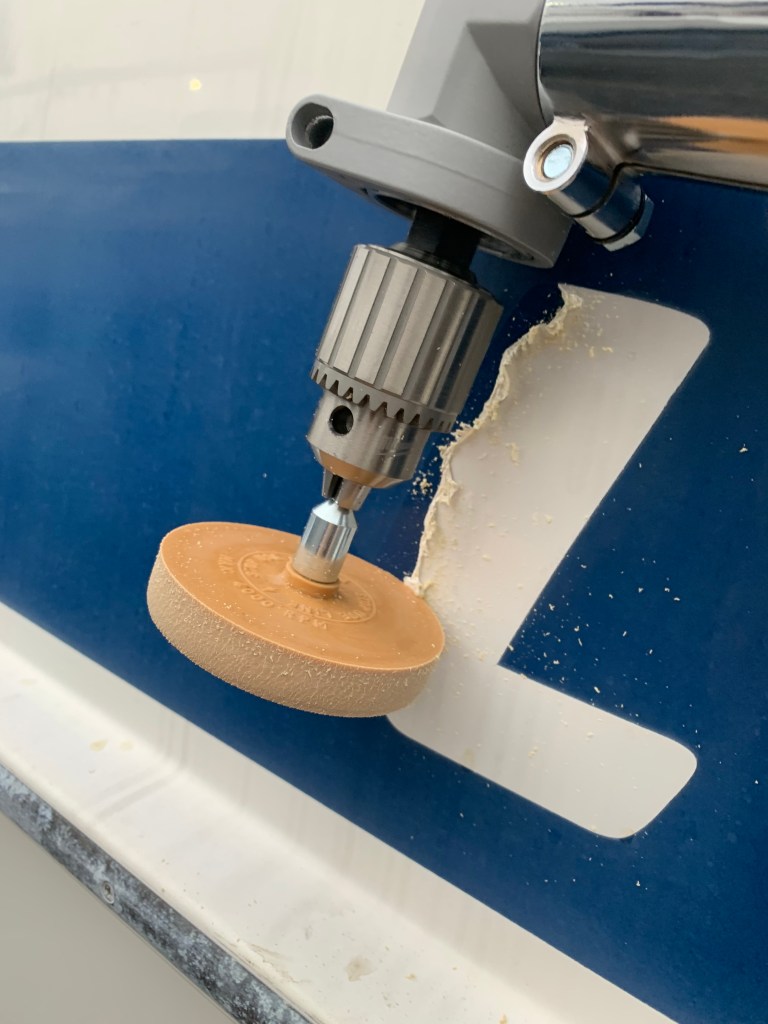
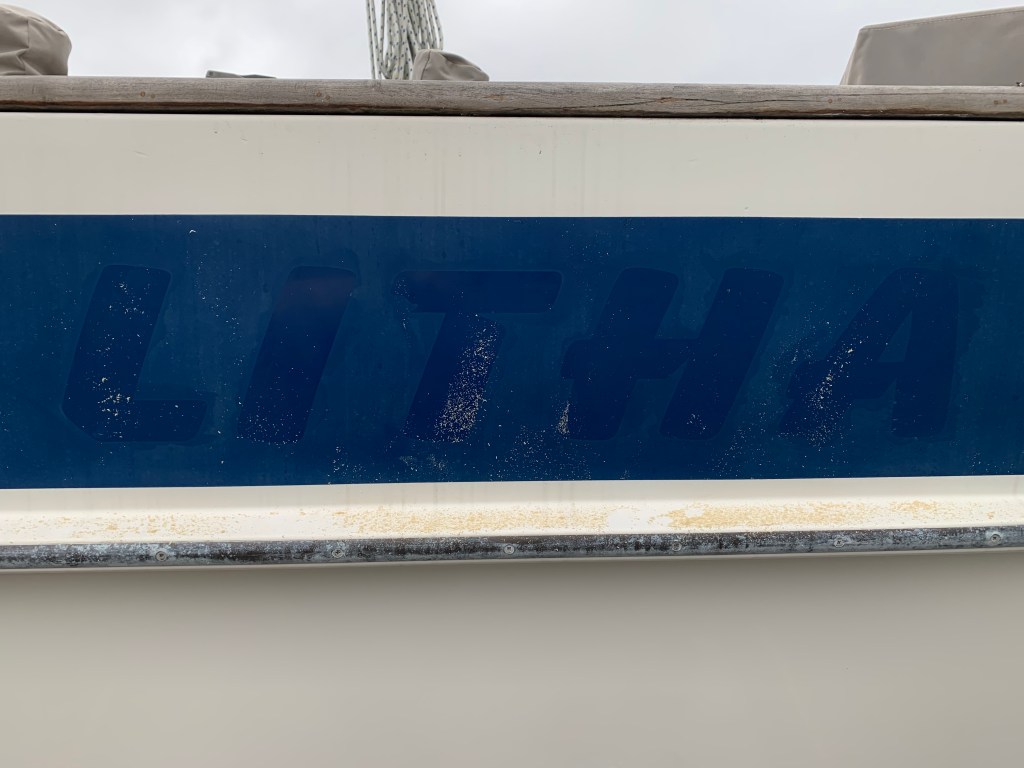
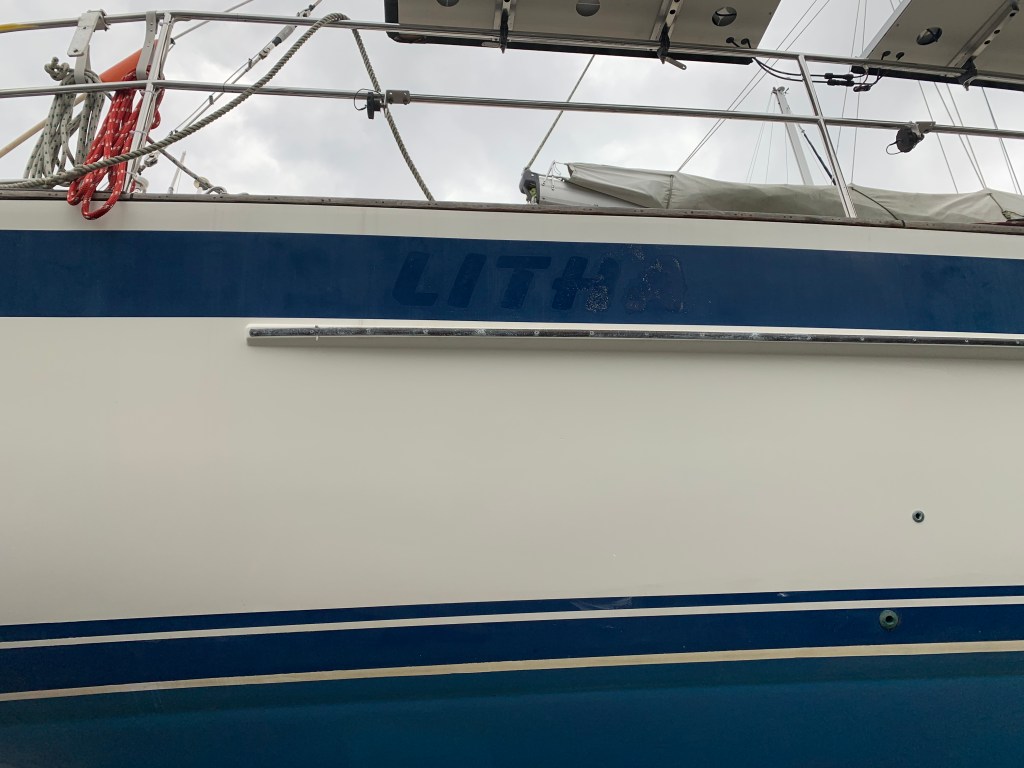
Buff and wax. Before we could beautify the hull, we must remove the old name “Litha”. This is done simply with a rubber wheel on a drill. The blue gelcoat stripes were looking very worn and oxidized. I put them through a 3-step process using different levels of compounding polish to pull out the color. After all of this work, I gave the boat a nice soapy wash to remove all of the dirt and oils. I think the results are amazing.


Lifejacket test. We found several offshore/ocean lifejackets and thought for a few minutes that we should keep these and use them. Although some of them were made in 1998, they were rugged and well-constructed. It was clear that the original owner and subsequent owners used these devices to protect themselves. There are plenty of other good items including tethers and jacklines. Upon closer inspection, we found many of them had corroded CO2 canisters even though their indicators were “green”. So, we decided to put them to a test.
Having the boat at Herrington Harbour North has been a blessing to us. I have gotten very familiar with her already working alongside Ray to tidy it up. This is an important step in new boat ownership that I cannot stress enough. Spend some alone and quiet time on the boat even if it is out of the water. That’s the best way to get to know her. You will also get a chance to make friends with others like I did with Glen, Ray and Paul. That’s all for now, there’ll be one more update before we launch and set sail.

 The Loxodograph