

it is always good to test out your storm sailing setup when the conditions are relatively calm and you aren’t under pressure of time, fast-approaching weather, or rough sea state .
Skyward has 2 storm sails (a storm jib and trysail) and a hank-on staysail. We testing the storm jib last year when we were on the Long Island Sound and heading into Norwalk Cove Marina for the Winter. This year on the Chesapeake, we decided to test out our hank-on staysail and our trysail.
All of these sails were purchased by previous owners. The staysail came inside of a North Sails bag. We didn’t pay much attention to this sail since we have a Solent rig with a furling genoa and furling jib set up. We recently watched the story about a sailor who left the Seychelles and single-handed his way near the African coast in the Arabian Sea. He lost his genoa, his main sail and his engine. This made us think that if that were to happen, we still would have our hank-on staysail.
Skyward has a removable inner forestay. The inner forestay is a steel cable that connects to a deck fitting just in front of the windlass. When not in use, the inner forestay can be stowed at the mast.
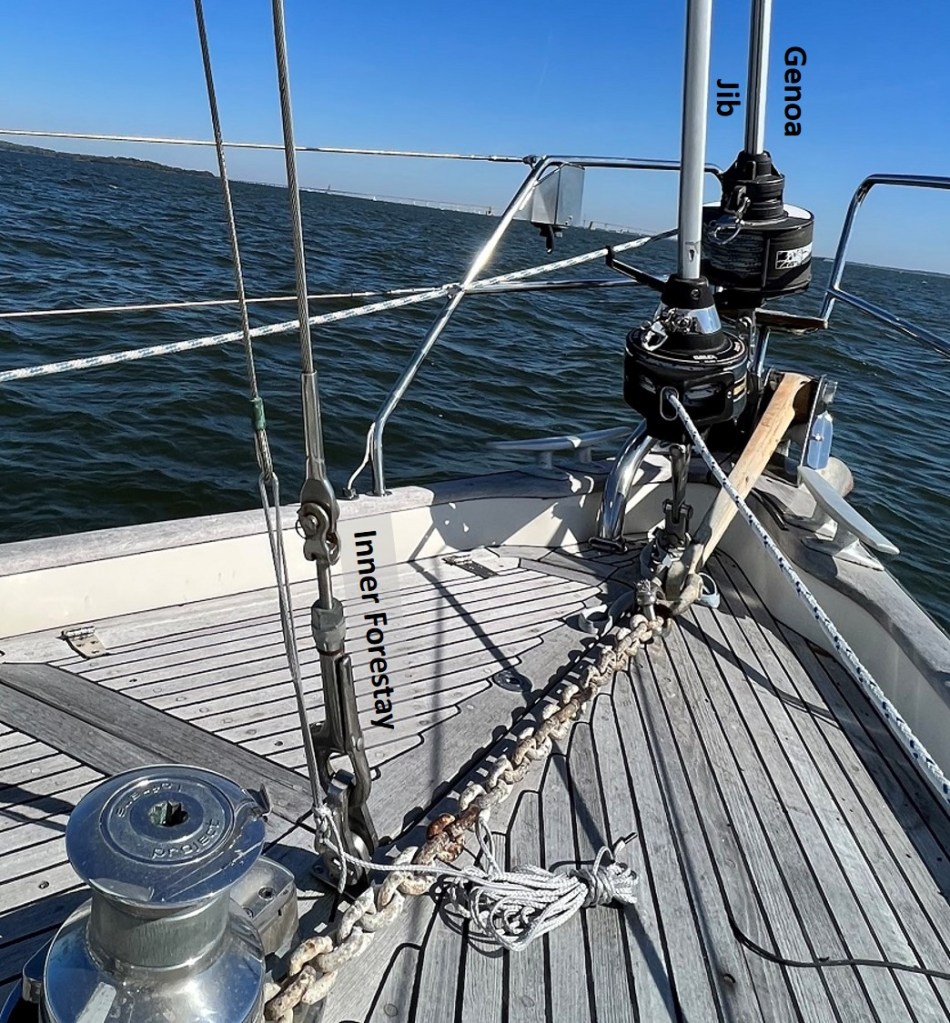
I pulled the staysail out of its bag and to my surprise…it was an Elvstrom! After tying bowlines for my control sheets, I connected the halyard and hoisted thie staysail. It was a thing of beauty.
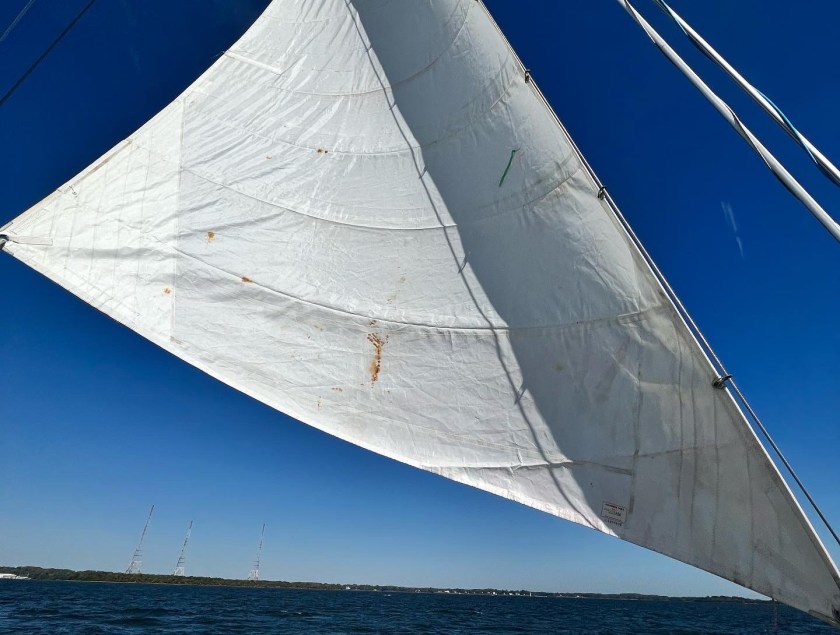
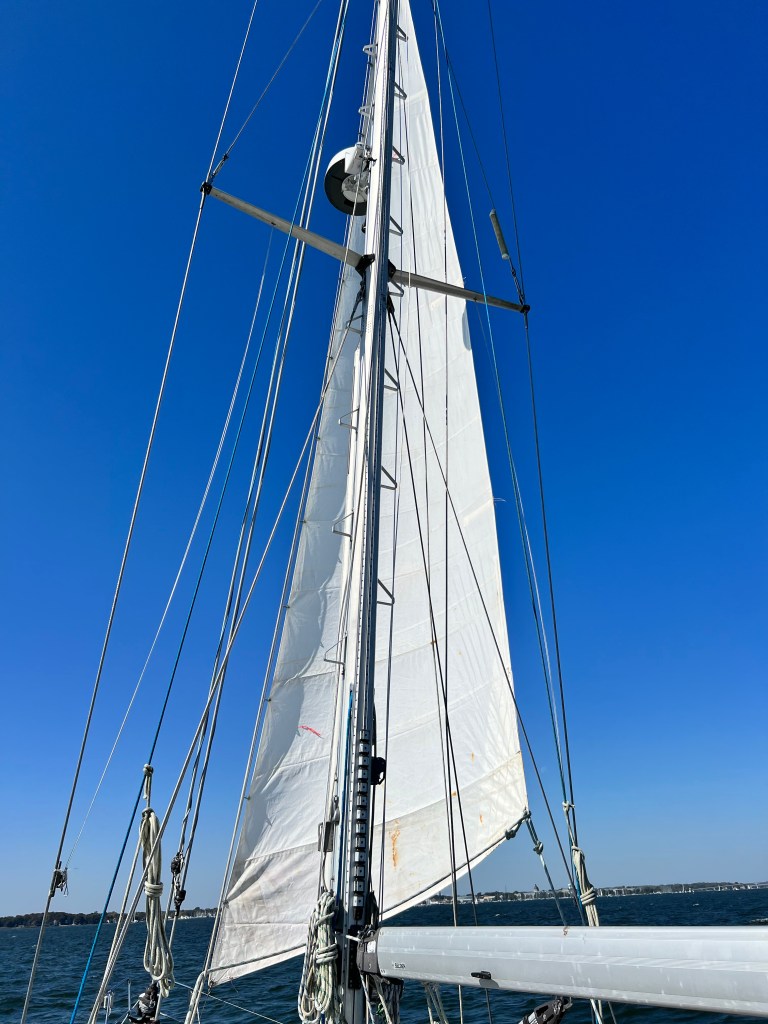
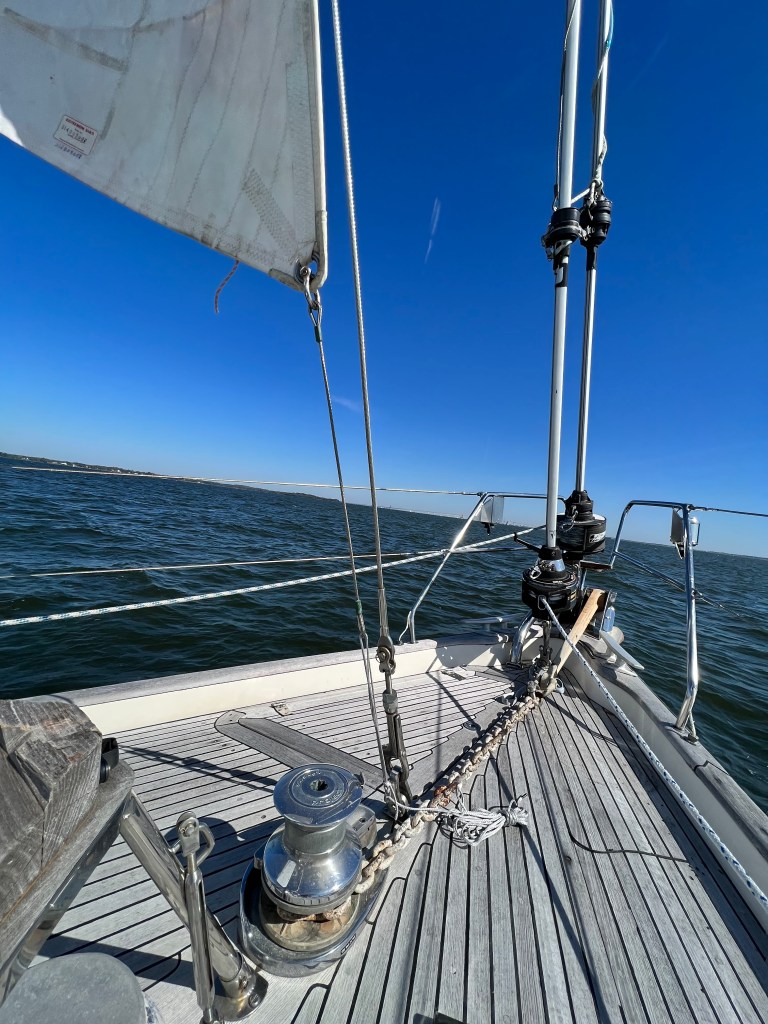
On another day this Summer, we tested out the North Sails Trysail. The Trysail is supposed to clip onto a second track running up the mast. We tested the setup with a completely bare mast/boom as our main was already removed for the Winter. We made a lot of rookie mistakes but it taught us lessons about how to put up this sail while out on the water.
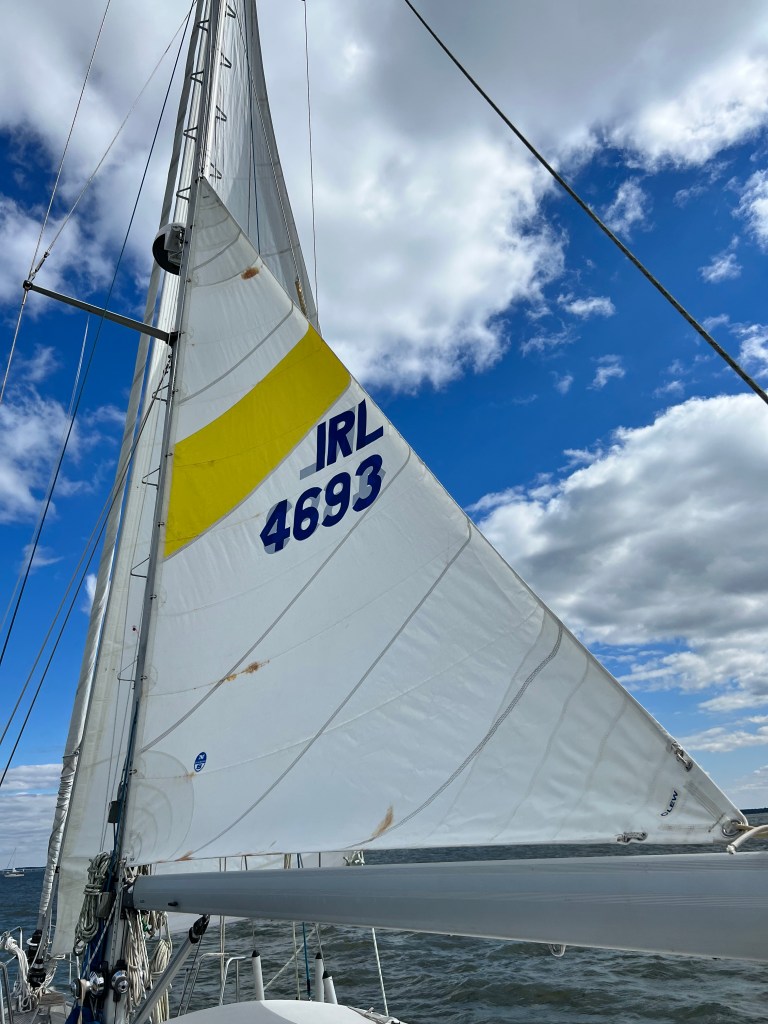
The first mistake we made was trying to fasten the clew to the main outhaul. That was a mistake not only in configuration/design but also in timing. Skyward’s outhaul line is a little short, so the clew being tied to the outhaul could only slide forward along the beam track a short distance until the outhaul line was too short. The sail is so well made for the boat that there wasn’t enough slack sail material along the foot to allow the last few cars to be connected to the mast track. After untying the clew, I was able to install all cars on the track.
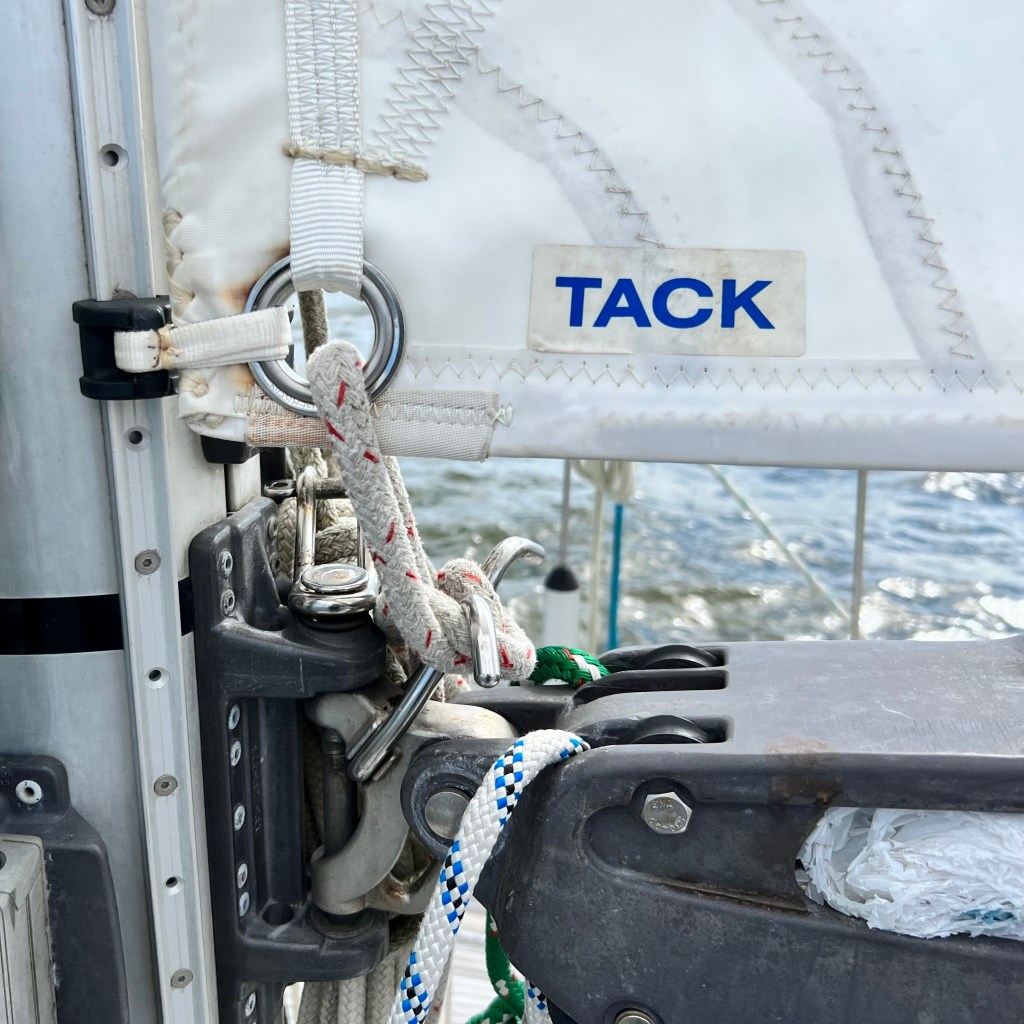
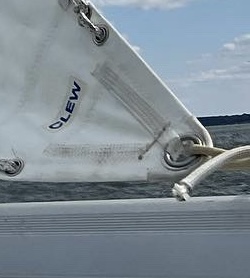
I re-tied the clew to the mainsail outhaul. This was both not easy to do having to reach around the boom and aligned the clew with the outhaul so that Rachel could just barely tie a knot. It was very klunky to do this underway with wind in our faces. What I learned after is that there is a particular approach for the clew and it involves bringing a line from the clew down to the deck and tying it off in a cabintop winch.
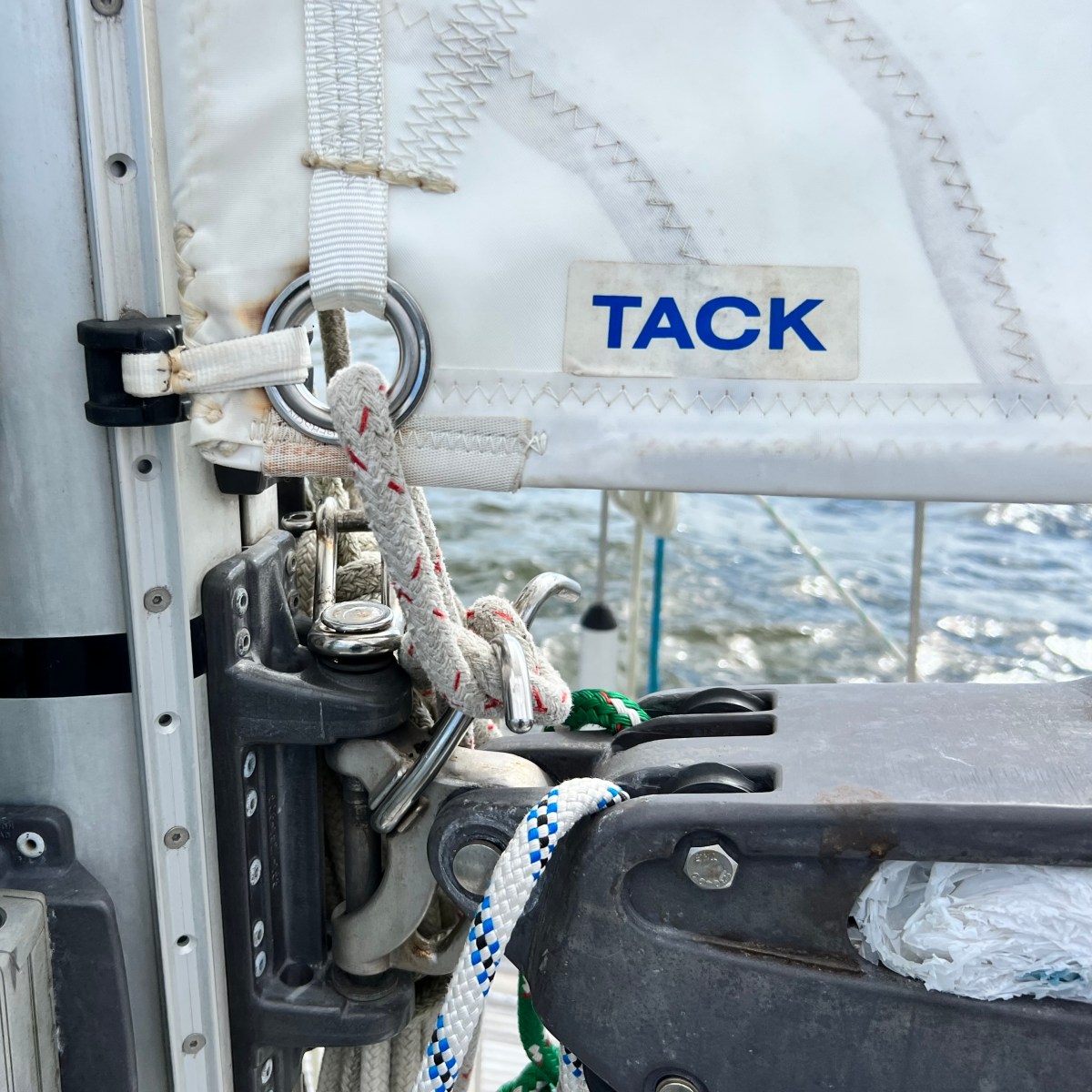
The second mistake was hoisting the trysail without a plan to secure the tack. With the (main) halyard in one hand, I fashioned the excess spinnaker halyard through the tack and around the gooseneck Cunningham hook. this was a poor approach, because if the wind was strong, we would have risked losing the tack. But since we were in low winds, this was not a problem.
Here are a couple of articles that were suggested by members of the HR blog group related to use and set up of trysails:
- Masterclass: How to set a storm trysail. https://www.yachtingworld.com/5-tips/set-a-storm-trysail-129840
- Skip Novak’s Storm Sailing Techniques Part 3: storm sails: https://www.yachtingworld.com/video/skip-novak-storm-sailing-part-3-using-storm-sails-517
With the trysail hoisted (incorrectly), we were able to pull forward in 10 knots of wind. After reading these articles and testing out our storm sail setup, I am still not sure how we will set up the boat for a large gale. One thing I know, we have at least 3 sails we can use in heavy conditions thanks to previous owners.

 The Loxodograph