


The Wichard Proline Safety Tether was one of my favorite new gear items that I took on my recent offshore trip from Hampton, VA to Antigua. It was light, unobtrusive and easy to use compared to my 20+ year old nylon tether with Wichard flat plate double-action safety hooks. The new tether had lightweight but seemingly strong aluminum hooks, thin webbing and a wide hook for side load protection, and I instantly fell in love with this gear at the 2024 Annapolis Sailboat Show.
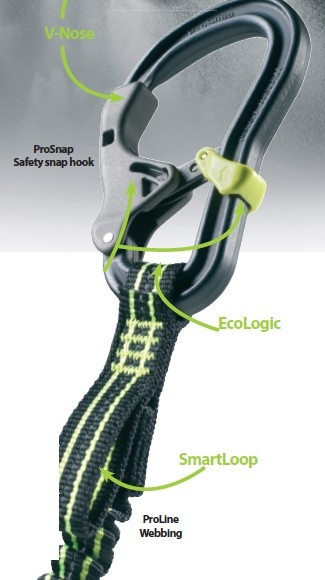
When you are getting ready for your late night shift at the helm, you are (hopefully), amongst other things, putting on your life jacket and tether. I usually leave my tether always connected to my lifejacket which also includes my Personal Locator Beacon (PLB) and a handheld VHF. If possible, I also leave a knife and whistle attached to my lifejacket. Climbing the companionway from the usually quiet cabin to the busy relatively busy cockpit can be a chore while wearing all of this safety gear, extra clothing, and carrying snacks/water, etc.
We always require crew to tether to the boat as soon as they enter the cockpit. After locking in, one of the first things I like to do is stick my head up and turn around to look at the instruments. Usually the person at the helm gets mad because I am blocking the view. I also glance out in front of the boat…I don’t know why, because usually you can’t see forward in pitch darkness.
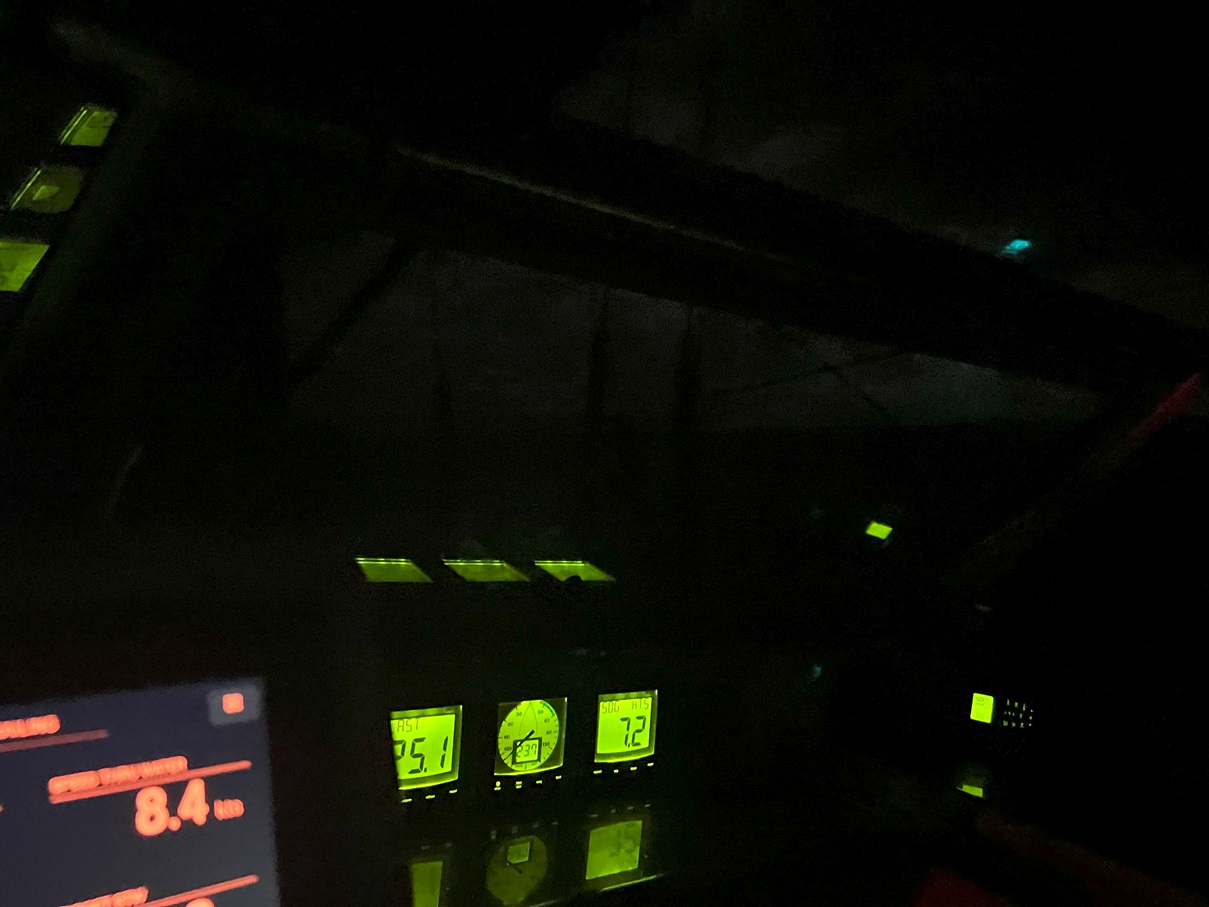
Once behind the helm, it is also habit to look up at the masthead and confirm that the Tricolor is on and the Windex is lit up. On this last trip, we decided to use the Tricolor on the masthead while at sea and save the use of navigational lights (“side lights”) until we were near shore. I thought that was a good idea as well.
On this trip, I had the 0000-0200 shift every night (10 days), and I loved it. Using the tether day and night became the routine as it should have been. I was clipping on and off while working the deck during the day. I am also a believer in double clipping whenever possible, which means to connect both of my double-ends of my tether to the boat instead of relying upon just 1 end. It goes without saying that one end of the tether is ALWAYS connected to the lifejacket, otherwise, it would do you no good!


While on one particularly rough evening shift, we had some commotion related to a weather shift which caused some unexpected and quick actions to have to be made. I had to quickly clip off and on again in different places around the cockpit to allow better physical access to the work I had to do. This had to happen in a split instance. I glanced down momentarily at my tether and saw that 2 of the 3 hooks were glowing in the dark.
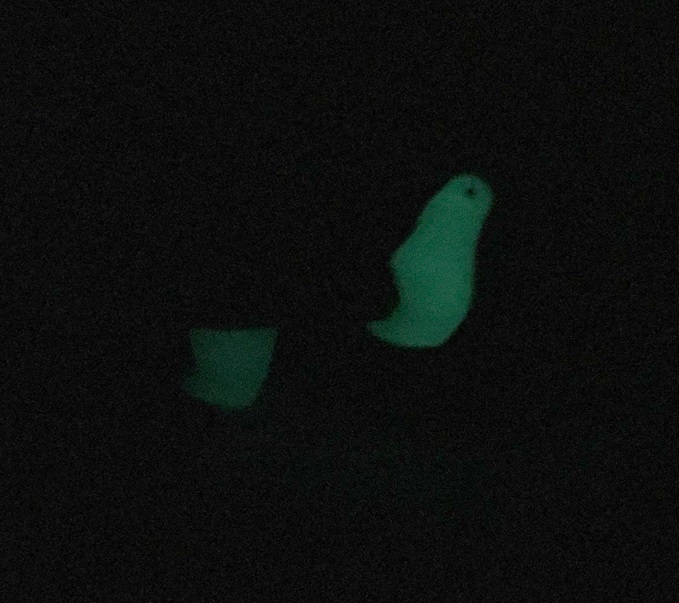
I went about my business to help get the boat settled after the disruption. But as I did that I thought instantly how brilliant this feature was. The glow-in-the-dark little release levers for the hooks make sure that I’m putting my thumb on the right hook instead of releasing my main hook which connects to my lifejacket. This is an outstanding example of ways to mistake-proof (“poka yoke”) something as important as using our safety gear.
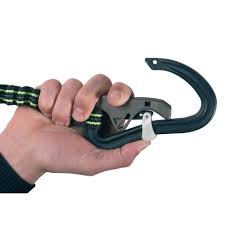
The main hook, as mentioned, connects to my lifejacket and NEVER comes off for the duration of the trip. The other two hooks are used to connect and disconnect to safety points and jacklines. All 3 hooks seem to be 100% identical on this tether. The difference cannot be seen in the daytime but it is very clear in the dark. If I have a millisecond to look, reach down and clip onto a safety point with my tether the glow-in-the-dark levers are somewhat of a fool proof mechanism to ensure I don’t drop the tether off of my lifejacket altogether.
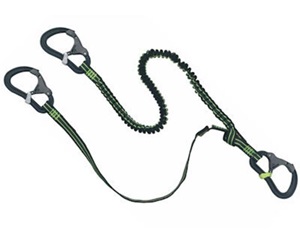
This feature -as cool as I thought it was- is not published in any marketing literature by any retailer or even Wichard. Other tethers on the market are also popular and have a similar look and design, but they do not have the glow-in-the-dark levers for the hooks.
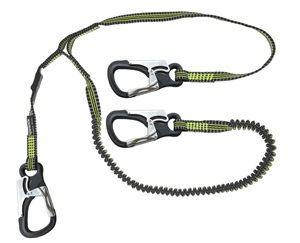
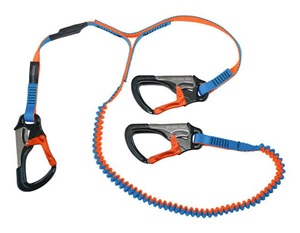
I chose the Wichard Proline Safety Tether over other designs while standing at the Landfall Navigation table at the boat show. Designs like the Kong were interesting as well, but I didn’t go that route because I didn’t like the idea of having a heavy stainless steel snap shackle on the lifejacket end. Less weight = more comfortable.
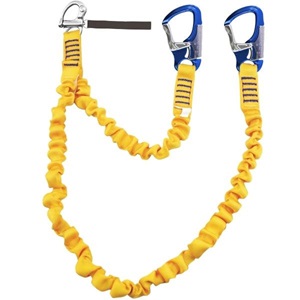
This design would, however, provide some split-0second certainty and mistake-proofing to protect you from accidentally untethering yourself from the boat. These tether hooks are different by design from the lifejacket snap shackle.
Finally, I am sharing a great video from the Ministry of Sailing which outlined why we as sailors should be careful when using a tether with a flat plate hook design.
Hope you enjoy sailing at night as much as I do. Please wear your safety gear and always tether yourself to the boat properly.

 The Loxodograph