

While some of my friends are cruising on their sailboats or visiting family around the world, I am still clocking in and out each day at work. We always expect to go sailing every weekend, but lately we’ve been lucky to slip the lines once a month. When we do get out on the water, we make it count.

It always happens…we both work a busy week, pack up, drive down to the marina on Saturday, start the engine, ready the boat for sailing, and I’m in the middle of all of these tasks, and then Rachel makes that gutwrenching sound. It is one of those “hmmm” or “yikes” or “oh no!” sounds that makes my heart sink because I know the something is not right, meanwhile I’m trying to remember to complete my standard operating procedure for pulling away safely from the dock. This time it was a leak discovered in our aft cabin.
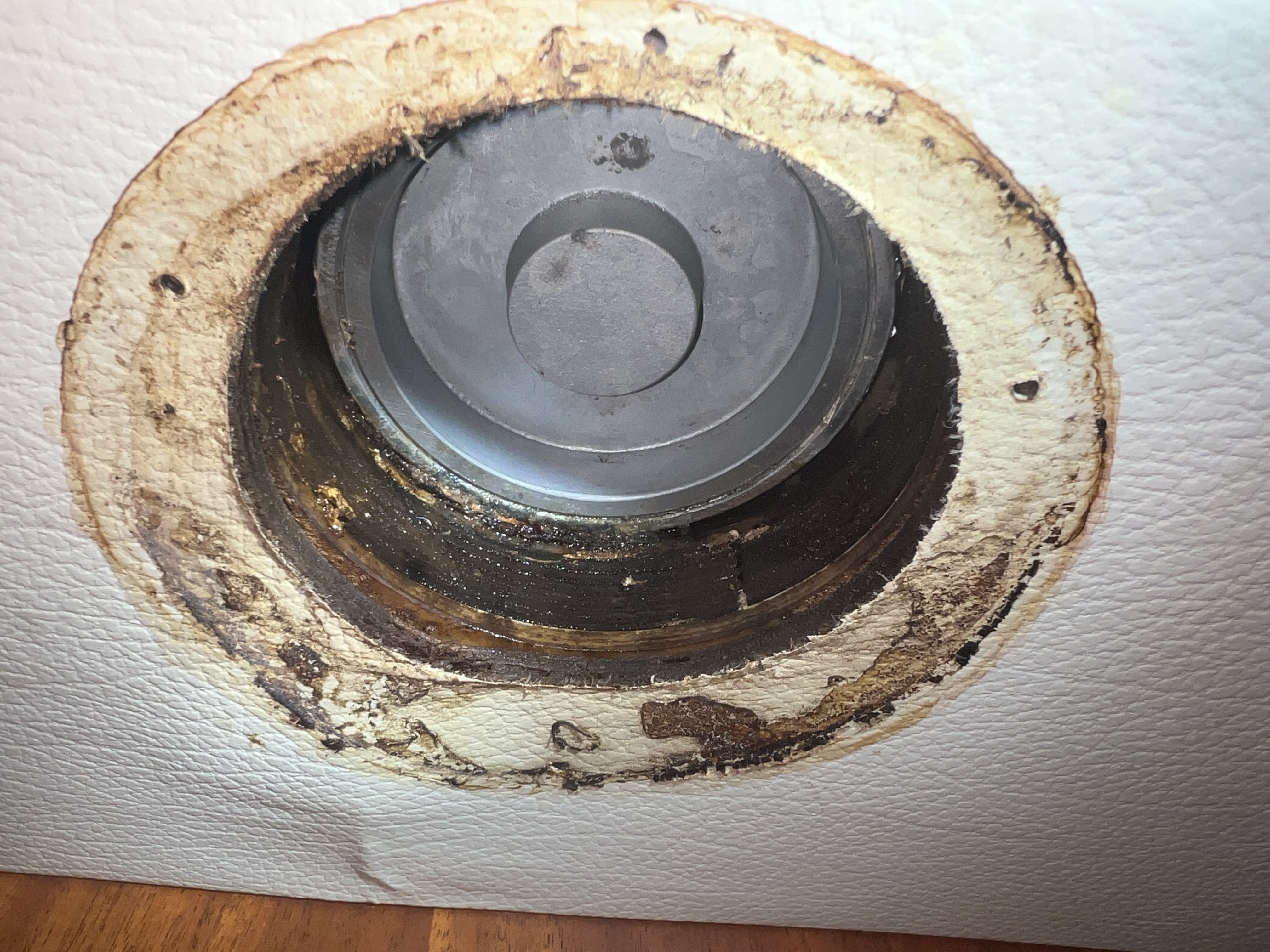
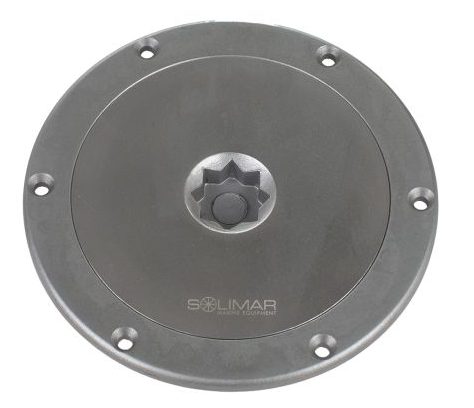
A water stain was found on our bedding below which was a telltale sign. I removed the 6″ headliner-covered disc that covers the emergency tiller hole. What we discovered was a wet core of plywood. Yes, the picture makes it look quite nasty. Apparently HR built this boat with a plywood block core around the deck cover for the emergency tiller. By the way, we only had one other leak after the teak deck replacement, which was solved quickly and was related to deck bolts securing the genoa car track. Back to this issue…my first thought was that the o-ring around the Solimar deck cover plate had lost its elastomeric features and dried up over the past 28 years. However, upon further investigation, I discovered a more vexing issue.
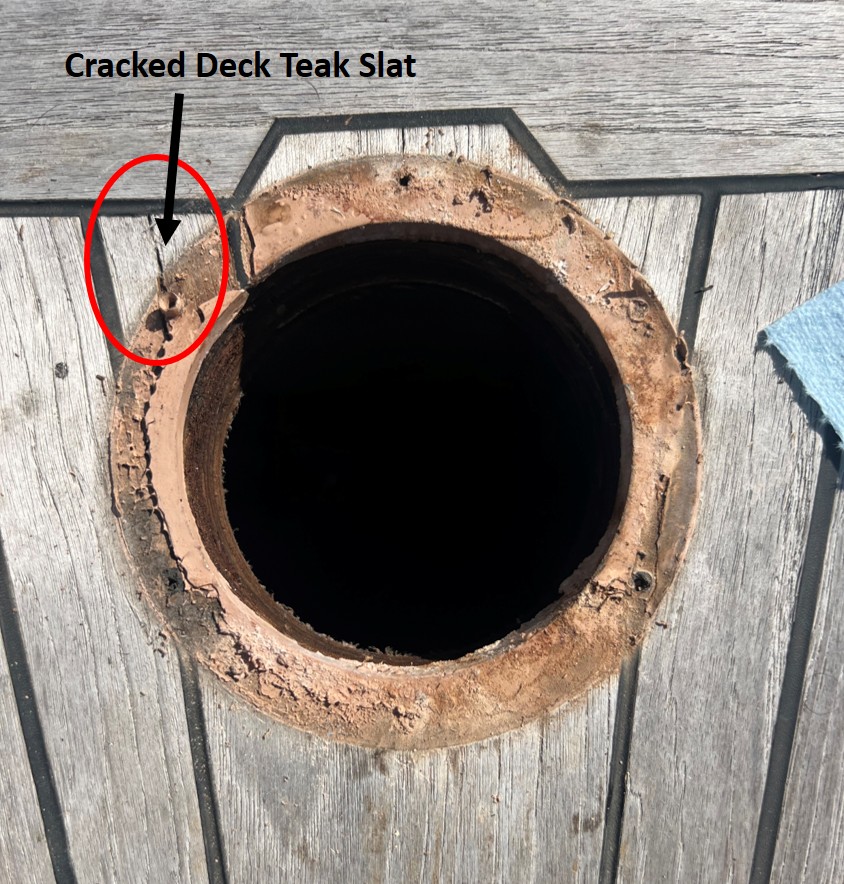
The water may have seeped in around the o-ring, but I also found a large and deep crack in one of the deck teak slats. I suspect that when the deck was installed in 2023, that the contractor used a large hole saw to cut a circle to install the original Solimar deck cover plate. When they did that, I believe the teeth dug in hard and literally ripped the small deck teak slat causing a crack that went deep enough to permit rain water to leak past the deck cover plate and down into the aft cabin.
I pulled out my West Marine epoxy and filled the crack so that it would never leak again. I also drilled out and epoxy-filled the Solimar deck cover plate screw holes. Once the epoxy was fully cured, I took the liberty to sand the whole area smooth to make a flat surface for butyl tape. I was also determined to ensure the deck plywood core would never soak up water again.
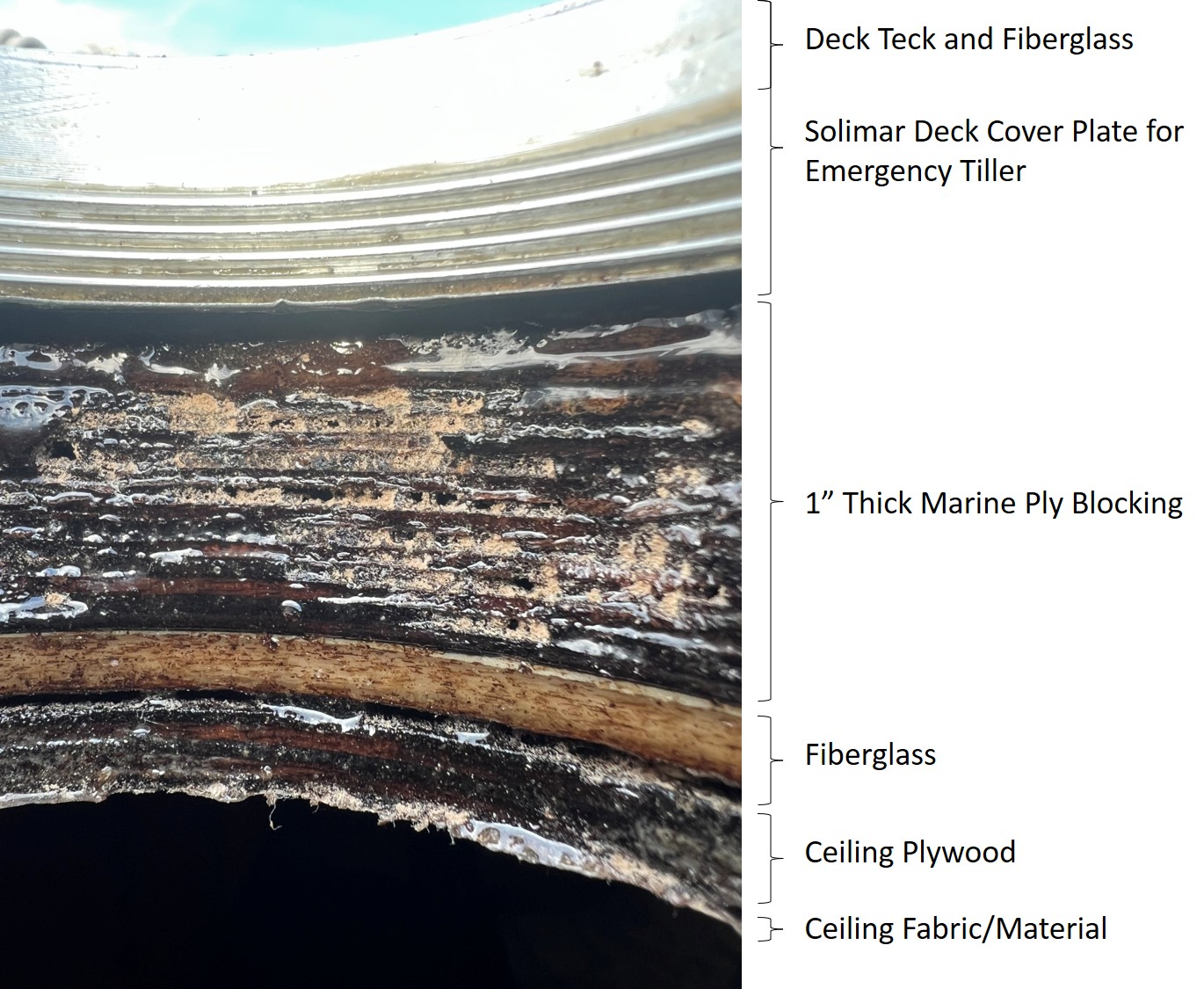
The deck in this area was comprised of marine ply core sandwiched by fiberglass. I let the layers dry fully with combination of the power of the sun and the use of a blow drier. Then I applied a thick coat of epoxy to the sides of the hole in the deck core which had not been previously epoxy coated.
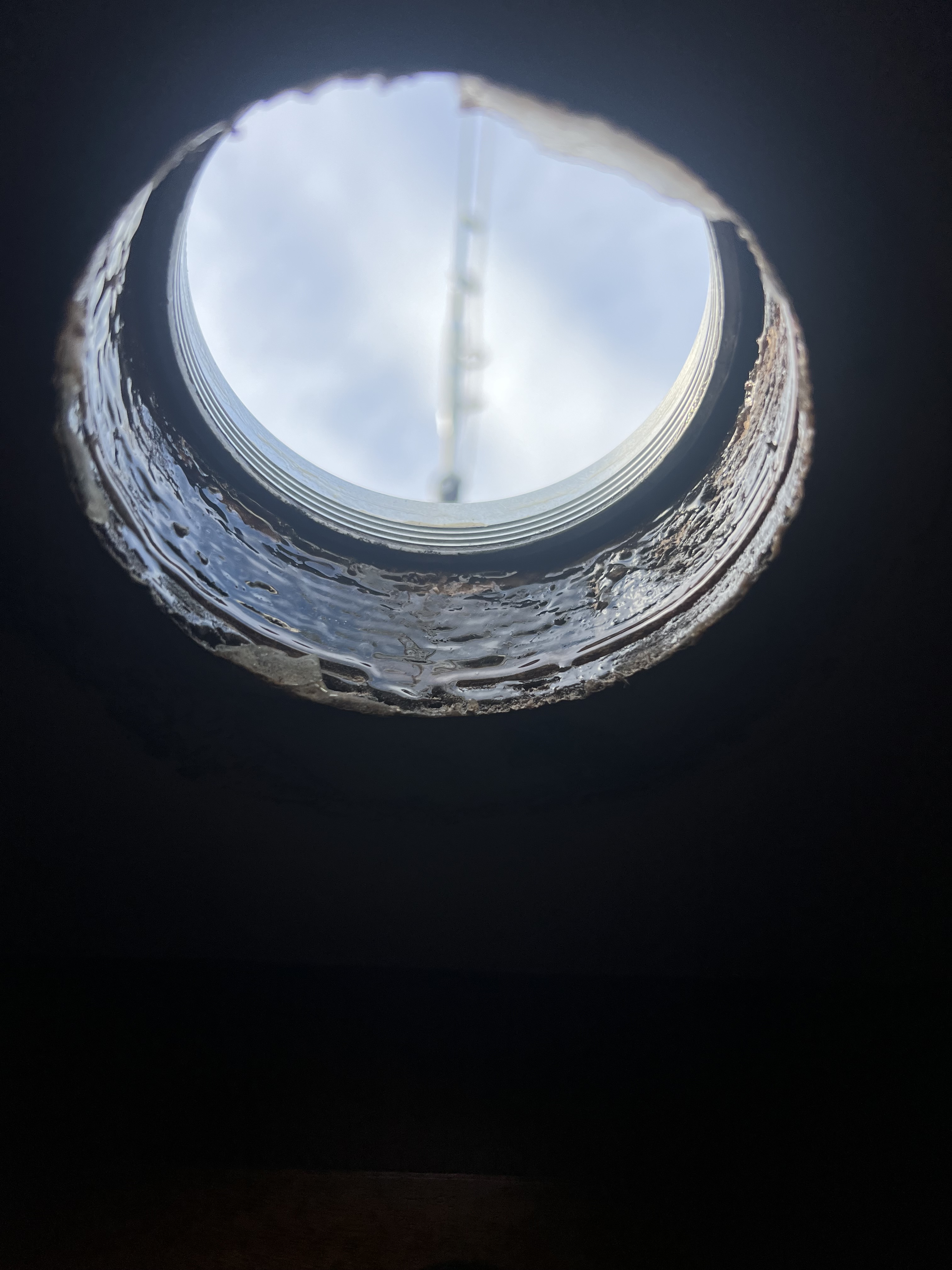
Once all of this brushed-on epoxy had cured and hardened, we installed the deck cover plate using butyl tape and longer deck screws. I left the cover plate installed for several days awaiting a good rainstorm to prove we solved the problem. In the middle of that waiting period, we discovered that the underside of the deck cover plate was collecting condensed moisture. Moisture formed underneath the deck cover plate which initially made me think that I hadn’t solved the leak. I realized that the hole was probably never insulated from the factory, and so moisture could fill the void space between the 6″ ceiling cover and the bottom of the deck cover plate.
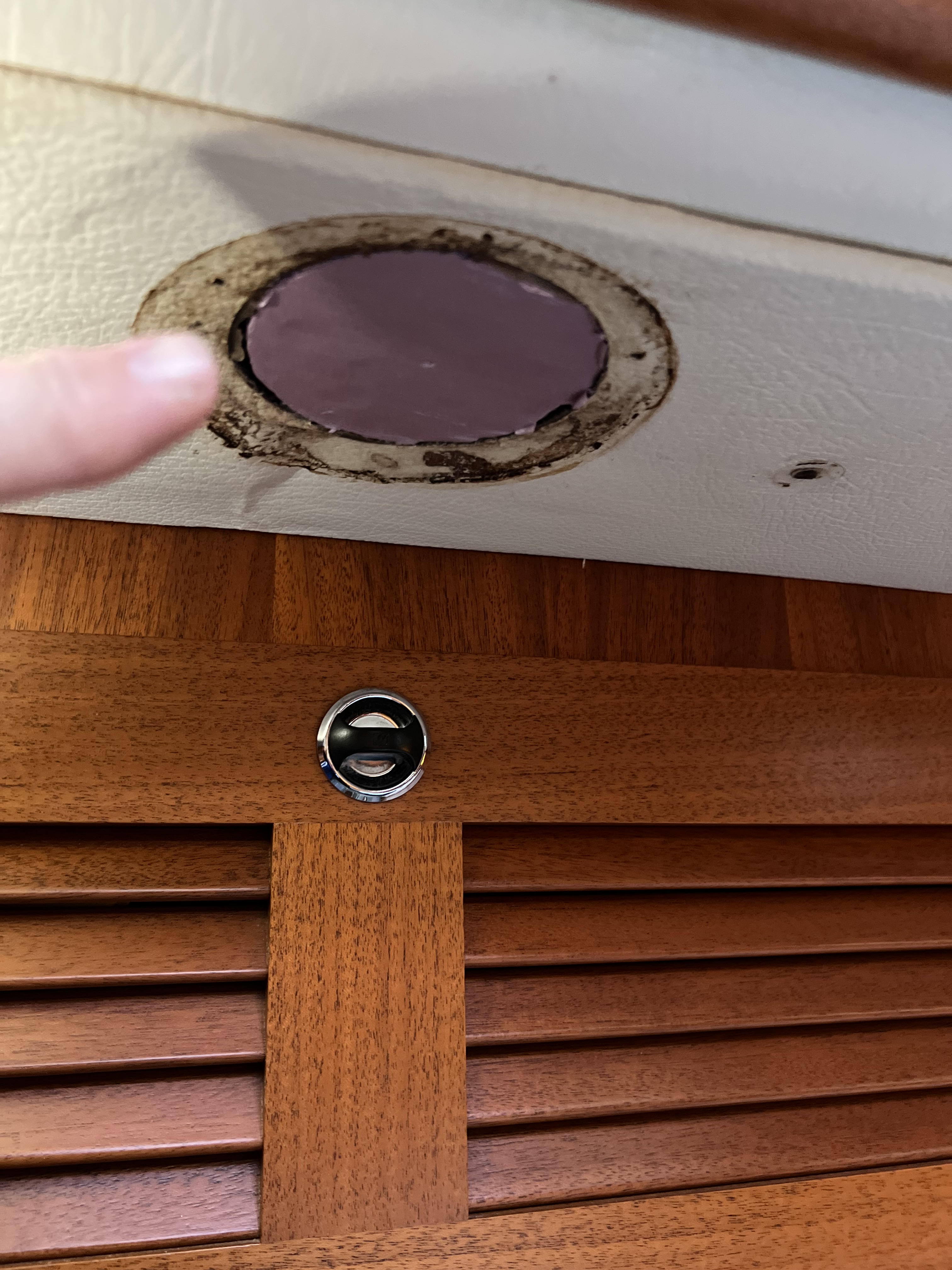
I cut up a 1″ thick x 6″ DIA disc of insulation from the home goods store. Once I was satisfied that the leak was fully addressed and the void space would be insulated, I made up a new 6″ cover for the ceiling. I bought 6″ wooden discs on Amazon, and then used excess ceiling fabric from HR Parts to make up my own cover plate. I think it turned out okay.
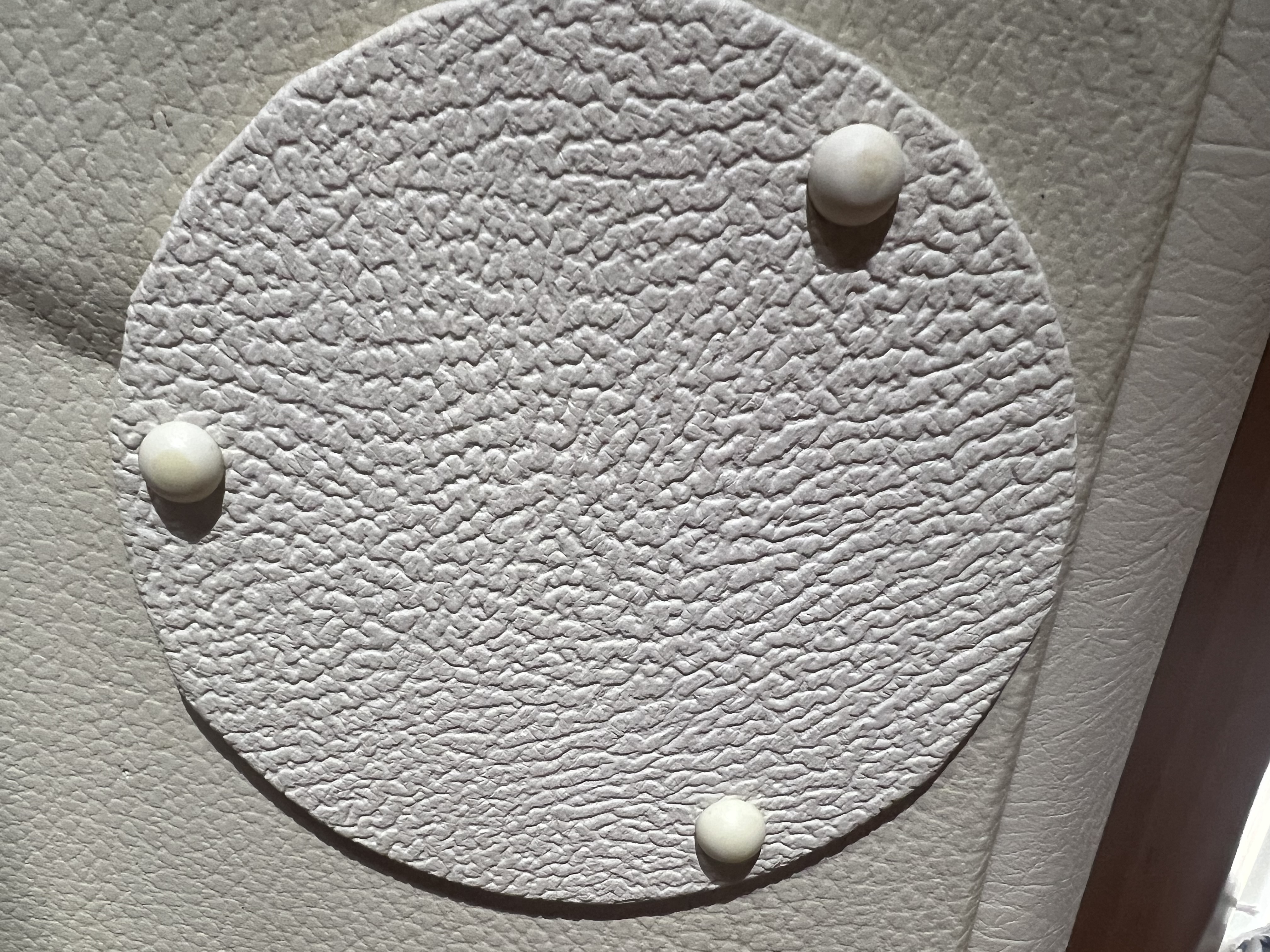
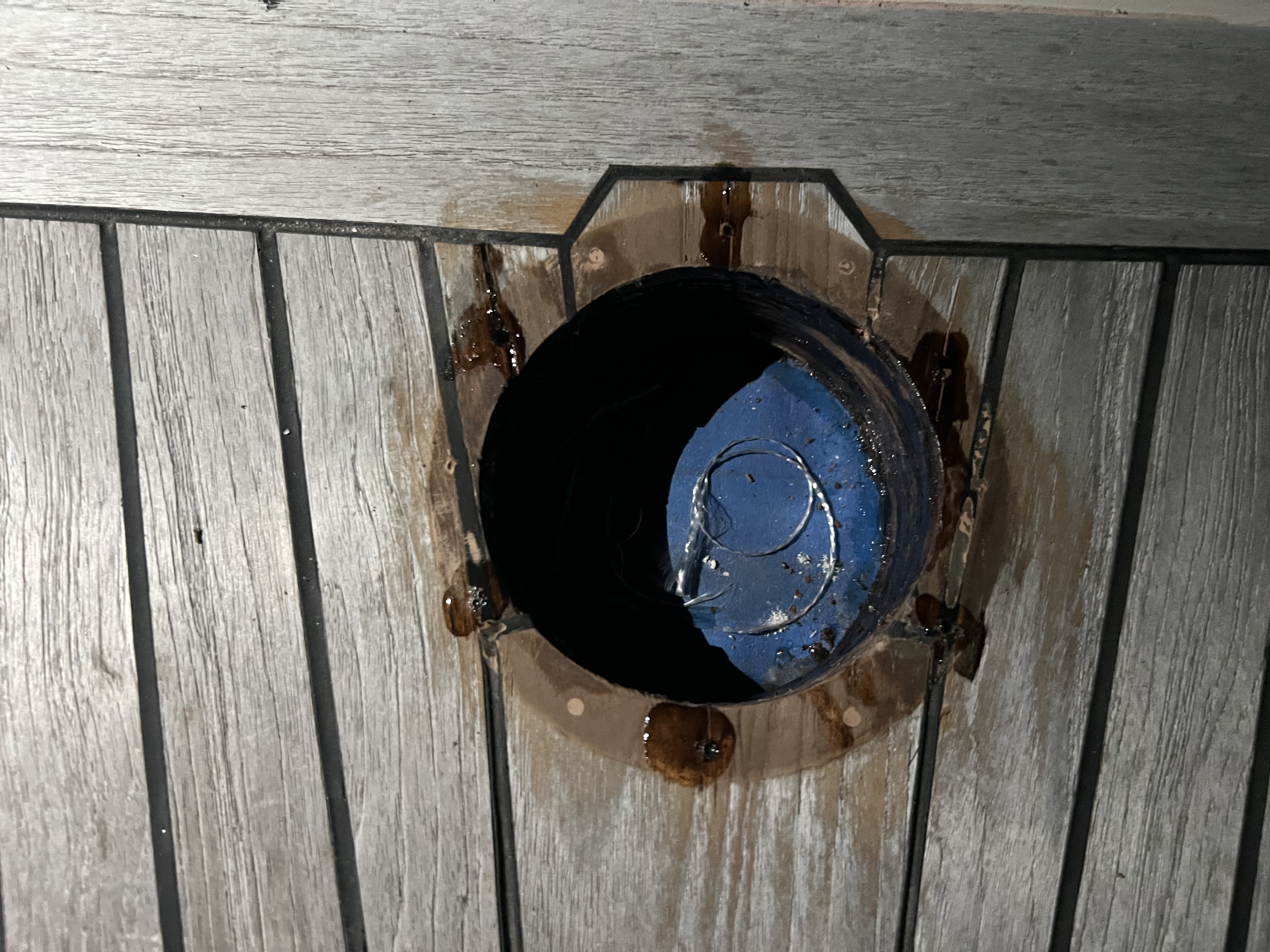
When the teak deck was replaced, the contractor used caulk to secure the Solimar deck cover plate to the deck. I didn’t like that approach, and so this time I chose to use gray butyl tape as mentioned previously. This picture shows the other side of the insulation that I installed. The insulation can easily be punched out of the hole from the deck in the event of a literal emergency.
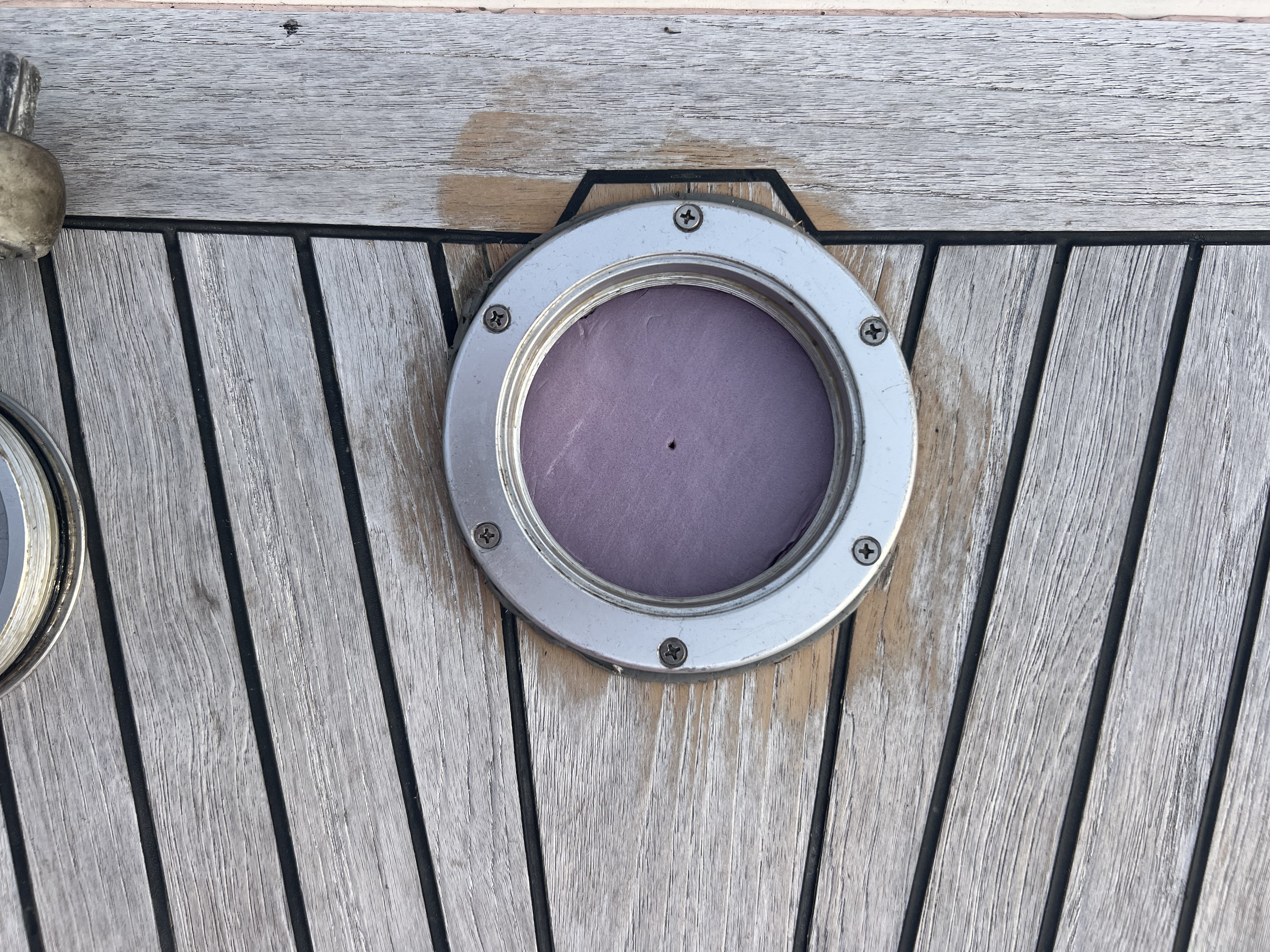
My advice is for anyone owning a similar era boat with this type of deck cover plate, it might make sense to open the plate and check for moisture in the core. Check to see if the hold is filled with insulation to ensure condensed moisture does not collect in that space. Drop me a line and let me know what you find. Meanwhile, I will go back to my day job dreaming of cruising with you all.
 The Loxodograph